
The Virgin Mistranslation
How a Translator's Slip Created Christmas
Reasoned Reality is incredibly important to me. You will never see a collection plate passed around here for ten percent of your hard-earned money. This historical information should be accessible to everyone. But if you are able to chip in, a monthly subscription of exactly $6.66 is a great way to support. If you are an exvangelical, like myself, you’ll understand my subscription price😊
I am so grateful to have you here, no matter what.
We are taught that the virgin birth of Jesus is the fulfillment of a specific Old Testament prophecy. But when you trace that prophecy back to its original Hebrew text, you find a translation error that the Gospel writer used to invent the entire doctrine.
The virgin birth is one of the most beloved, recognizable, and essential doctrines in the Christian faith. Christmas cards, hymns, nativity scenes, creeds, and Sunday school flannel boards have all rested on a single claim. A young woman, untouched by any man, conceived and gave birth to the Son of God in fulfillment of a prophecy uttered seven hundred years earlier by the prophet Isaiah. The Gospel of Matthew explicitly invokes that prophecy by name, citing Isaiah 7:14 as the source of the miracle. We are told this is one of the cleanest examples of Hebrew prophecy precisely fulfilled in the New Testament.
It is a beautiful, tidy, and compelling argument. But there is a massive linguistic problem with this storyline.
When you look up Isaiah 7:14 in the original Hebrew text, the prophecy does not say what Matthew says it says. The Hebrew word that became the foundation of the entire virgin birth doctrine does not mean “virgin.” It means “young woman.” A Greek translator working in Alexandria more than two hundred years before Jesus was born chose a Greek word that subtly shifted the meaning. Two centuries later, the author of Matthew picked up that mistranslation, ran with it, and used it to build a supernatural origin story for Jesus that the original Hebrew prophet never wrote and never imagined.
To understand how this works, we have to start with what Isaiah was actually saying.
Isaiah 7 is set during a specific political crisis in the eighth century BCE. The kingdom of Judah is being threatened by an alliance of two enemy kings to the north. King Ahaz of Judah is panicking. The prophet Isaiah is sent to deliver a divine reassurance. He tells Ahaz that within a very specific timeframe, before a particular child is old enough to know good from evil, the threatening alliance will collapse and the danger will pass.
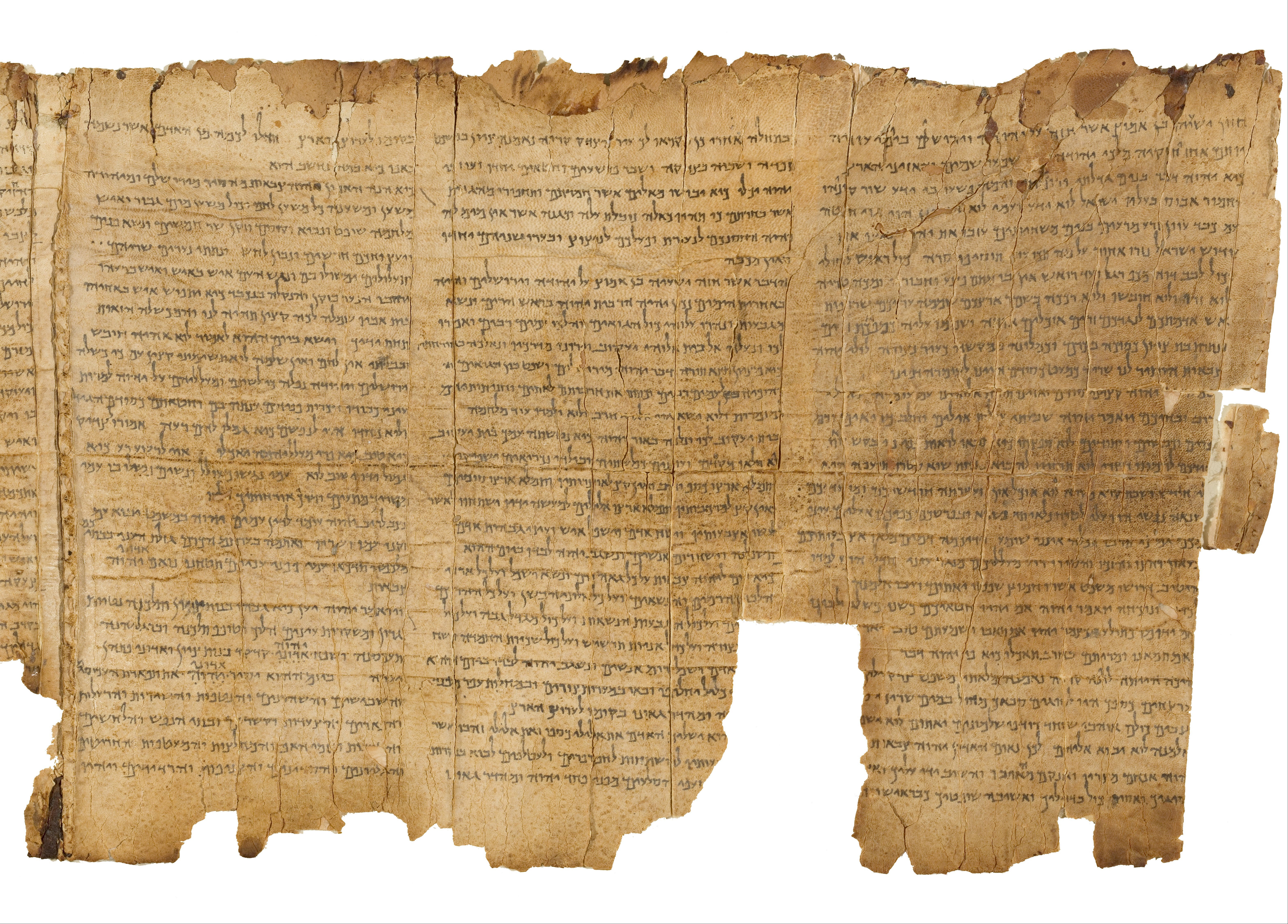
The relevant verse, in the Hebrew, reads that “the almah is with child and shall bear a son, and shall call his name Immanuel.” The word almah refers simply to a young woman of childbearing age. It is used elsewhere in the Hebrew Bible to describe Rebekah at the well and Miriam watching baby Moses, and in neither case is virginity the point. There is a separate, specific Hebrew word for virgin. That word is betulah. Isaiah does not use it.
Read in its original context, the verse is a short-term sign. A young woman known to King Ahaz, possibly the queen herself, was already pregnant. By the time her child was old enough to eat solid food, the political crisis would be over. There is no miracle. There is no virgin. There is no Messiah seven centuries in the future. The prophecy is dated, geographically specific, and self-contained.
The story changes around 250 BCE.
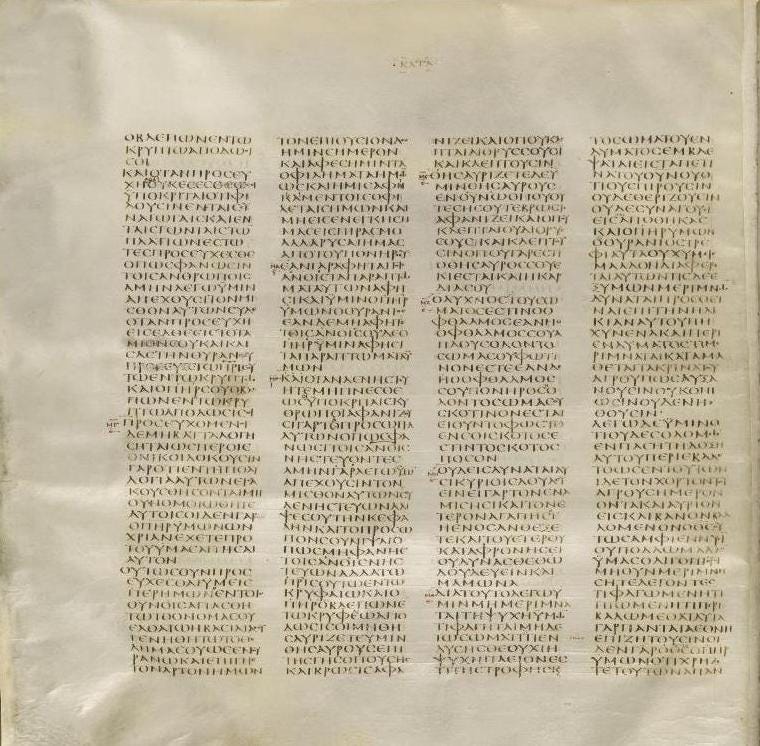
A community of Greek-speaking Jewish scholars in Alexandria began producing the Septuagint, a Greek translation of the Hebrew scriptures, intended for diaspora Jews who no longer spoke Hebrew fluently. When they reached Isaiah 7:14, the translator had to choose a Greek word for almah. He chose parthenos. In classical Greek, parthenos can mean a young woman, but it most commonly carries the more specific meaning of virgin. The translator was not committing fraud. He was making a choice that was reasonable in his cultural moment but that quietly narrowed the meaning of the original Hebrew.
That single word change sat dormant for two and a half centuries.
Then the author of the Gospel of Matthew, writing in Greek in the 80s CE, sat down to compose his account of Jesus’ birth. Matthew was deeply committed to portraying Jesus as the fulfillment of Hebrew scripture. Almost every chapter of his Gospel contains an “and this was to fulfill what was spoken by the prophet” formula. Matthew did not read Hebrew. He read the Septuagint. When he encountered Isaiah’s parthenos in Greek, he saw not a young woman in eighth-century Jerusalem, but a literal virgin, miraculously bearing a divine child.
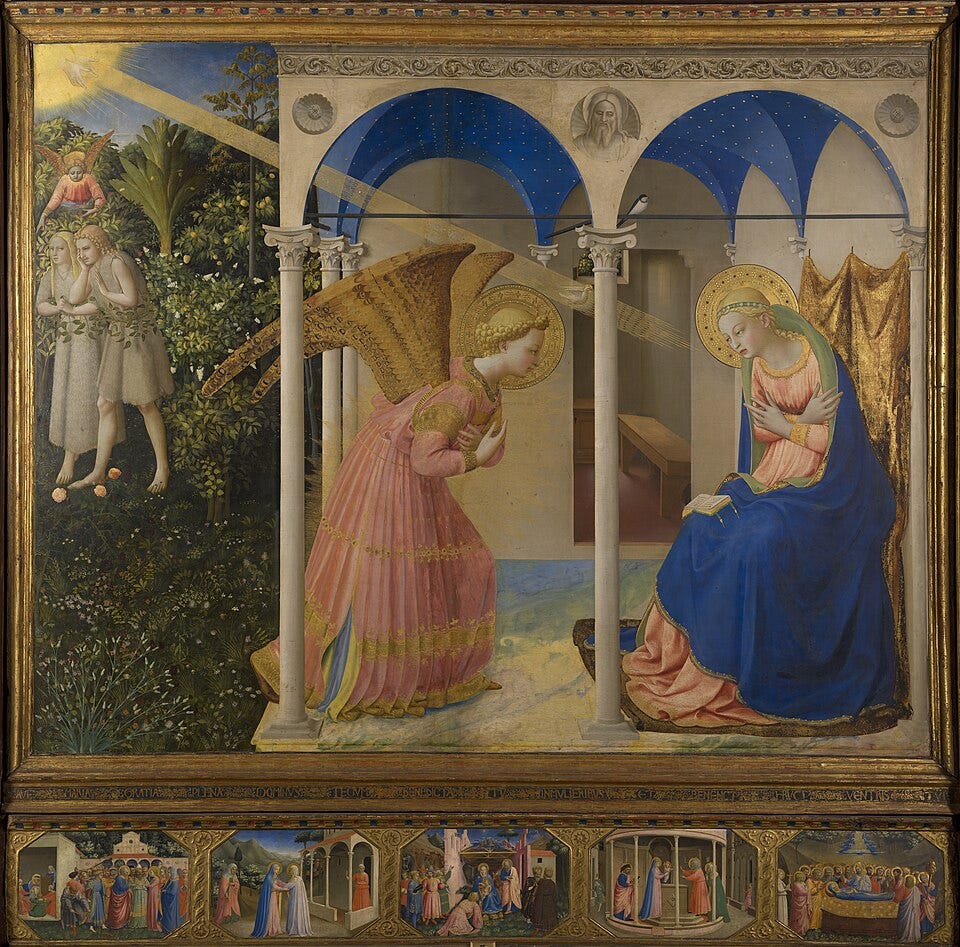
So Matthew built a birth narrative around this misreading. He took the older idea that Jesus was the promised Messiah, layered onto it the Greek mistranslation of Isaiah 7:14, and produced one of the most influential paragraphs in human history. He explicitly cites the prophecy. He links the name Immanuel to Jesus. He inserts a virgin conception into a tradition that, until that moment, had no such claim.
The Gospel of Mark, written before Matthew, contains no virgin birth. The Apostle Paul, writing earlier still, never mentions a virgin birth and instead simply says Jesus was “born of a woman” and was descended “according to the flesh” from David. The Gospel of John, written after Matthew, also does not include a virgin birth narrative. The doctrine appears in only two of the four Gospels, Matthew and Luke, and the two stories share no significant details with each other and contradict one another at almost every turn.
How can two of the four Gospels build a foundational miracle on a translation error that the Hebrew prophet never wrote?
The genealogies make the situation worse.
Matthew opens his Gospel with a long genealogy tracing Jesus’ ancestry back to Abraham. Luke includes a different genealogy, going back further to Adam. The two lists do not match. Matthew says Joseph’s father was Jacob. Luke says Joseph’s father was Heli. The two lists give entirely different lines of descent, with different numbers of generations and almost no shared names between David and Joseph.
But the deeper problem is not the contradiction. It is the logic. Both genealogies trace Jesus’ lineage through Joseph. The entire purpose of the genealogies is to establish that Jesus is the rightful heir of David through his father. That makes perfect sense if Joseph is, in fact, his father. It makes no sense at all if Joseph is not his biological father, which is the entire point of the virgin birth.
The two doctrines, virgin birth and Davidic descent through Joseph, are mutually exclusive. They appear in the same two Gospels, on the same pages, attached to the same Jesus. The authors clearly inherited two separate streams of tradition, one that made Jesus the natural son of Joseph and a descendant of David, and another that made him a miraculous child of a virgin. They tried to keep both. The result is a contradiction that has been quietly preserved for two thousand years.
The virgin birth did not begin with the prophet Isaiah. It began with a Greek translator’s word choice in third-century BCE Alexandria. It evolved into a literary device in the hands of a Greek-speaking Gospel writer fifty years after the crucifixion. It was bolted onto a genealogy that made Jesus the biological heir of Joseph. And it was ultimately marketed, for two thousand years, as the precise fulfillment of a Hebrew prophecy that was never about a virgin and never about a Messiah.
Recognizing this textual history does not have to dismantle the cultural beauty of the Christmas story. But it does require us to be honest about the linguistic, literary, and deeply human origins of the doctrine that still defines how a billion people think about the birth of God.
Sources & Further Reading
The Birth of the Messiah: A Commentary on the Infancy Narratives in the Gospels of Matthew and Luke by Raymond E. Brown (The definitive Catholic scholarly study of the conflicting birth narratives, including a thorough treatment of the almah/parthenos question).
Misquoting Jesus: The Story Behind Who Changed the Bible and Why by Bart D. Ehrman (A clear introduction to the textual and translational issues that have shaped the New Testament across centuries).
The Jewish Annotated New Testament edited by Amy-Jill Levine and Marc Zvi Brettler (A leading scholarly resource that places the New Testament back inside its original Jewish linguistic context, including the Septuagint translation problem).
You will never see a collection plate passed around here for ten percent of your hard-earned money. This historical information should be accessible to everyone. But if you are able to chip in, a monthly subscription of exactly $6.66 is a great way to support.