

The Six Verses
The entire biblical case against gay people rests on six passages. Here is what they actually say when you read them.
The entire biblical condemnation of gay people comes from six verses, and I was handed all six the way most of us were: not as texts to study but as a truth I had to accept. That truth was preached with such confidence that it never occurred to me to check.
When I finally looked into the text deeper, what surprised me was not how harshly it condemned anyone. It was how little it actually said. The verses given to me as God’s law, ended up not condemning what I was told.
So let’s read the verses the way they were originally written and not focus on the translation we received in the pew. Six verses in their own languages written in a different time.
As we read, you will notice that none of these verses refer to a committed, loving relationship between two people of the same orientation. This, after all, is a category the ancient world did not even have a word for.
Sodom Was Not Punished For Homosexuality
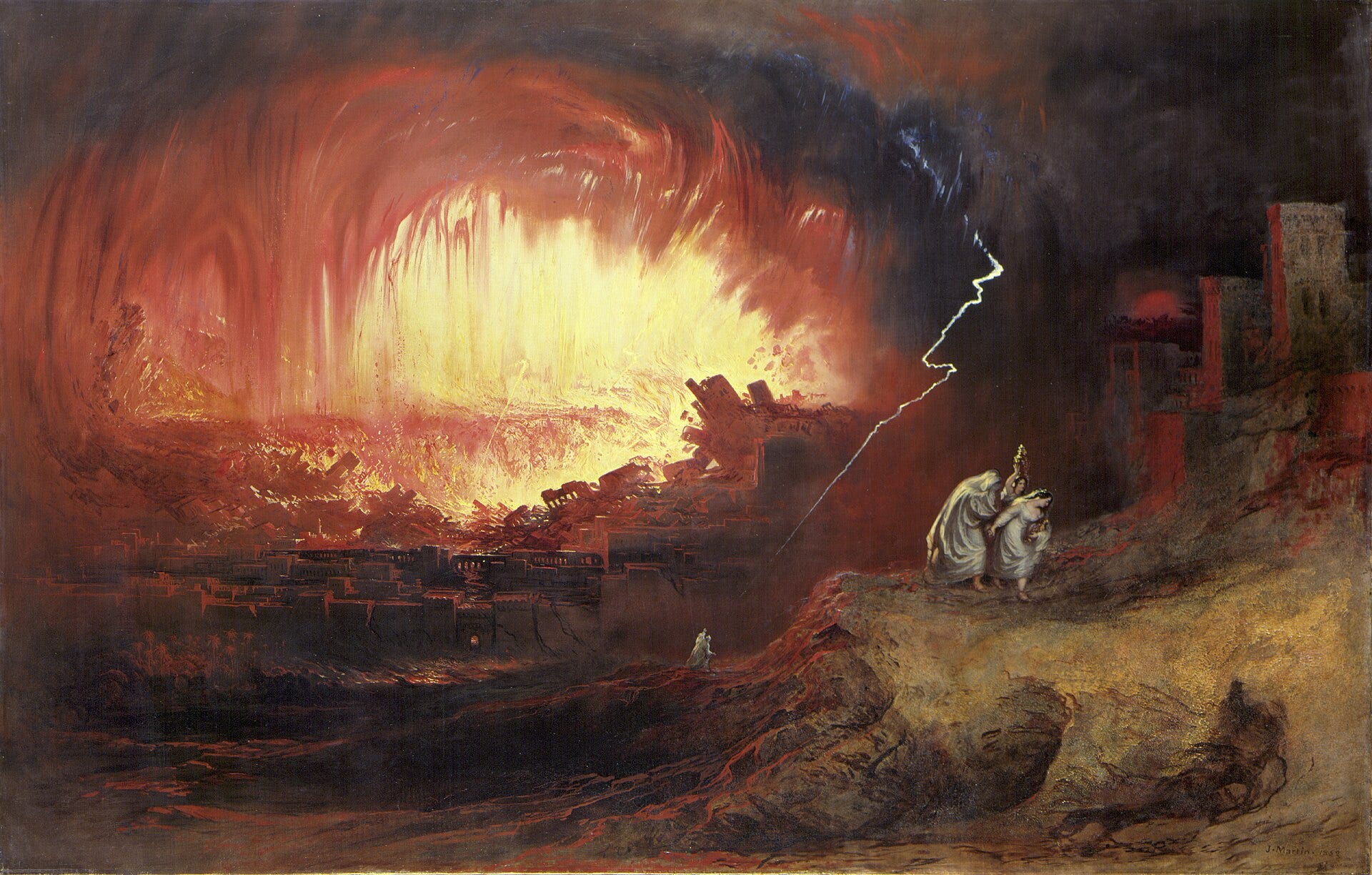
Most of us are familiar with Sodom. The story found in Genesis 19. It goes like this. To men arrive in the city and are taken in by a man named Lot. When night falls, the other men who live in the city, surround Lot’s house and command him to send the two men out so that they can “know” them. In other words, the men of the city were threatening to gang rape of two strangers, in order to humiliate them. In ancient times, this was an act of domination. The strongest way to express contempt for a foreigner.
What it is not is a story? Any mention of these two men being in love. So why are we told it is a story on same-sex relationships? It’s like reading an account of a violent crime and using it to teach about romance. The bible is very clear what the sin of Sodom was and it tells us directly. Look up Ezekiel 16. God says the sin of Sodom was arrogance, gluttony, comfortable ease, and refusing to help the poor. It boils down to a story about how we treat the vulnerable. Not a warning about same-sex relationships.
Ezekiel 16 does bring up a few complications. It mentions the people of Sodom did detestable things. One more place in the New Testament, Jude 1:7, says they were chasing after strange flesh. This however is interpreted by scholars as an attempt to have sex with angels. Again, not same-sex relationships. The sexual aspect of the story is real, but it is a reference to rape. Sodom was condemned for cruelty towards the vulnerable, not a example of God punishing people because they are gay.
Let’s Talk About Leviticus
The two most used verses against homosexuality are found in the book of Leviticus. You will see these verses plastered all over fundamental Christian’s social media feeds, blogs, podcasts, and even t-shirts.
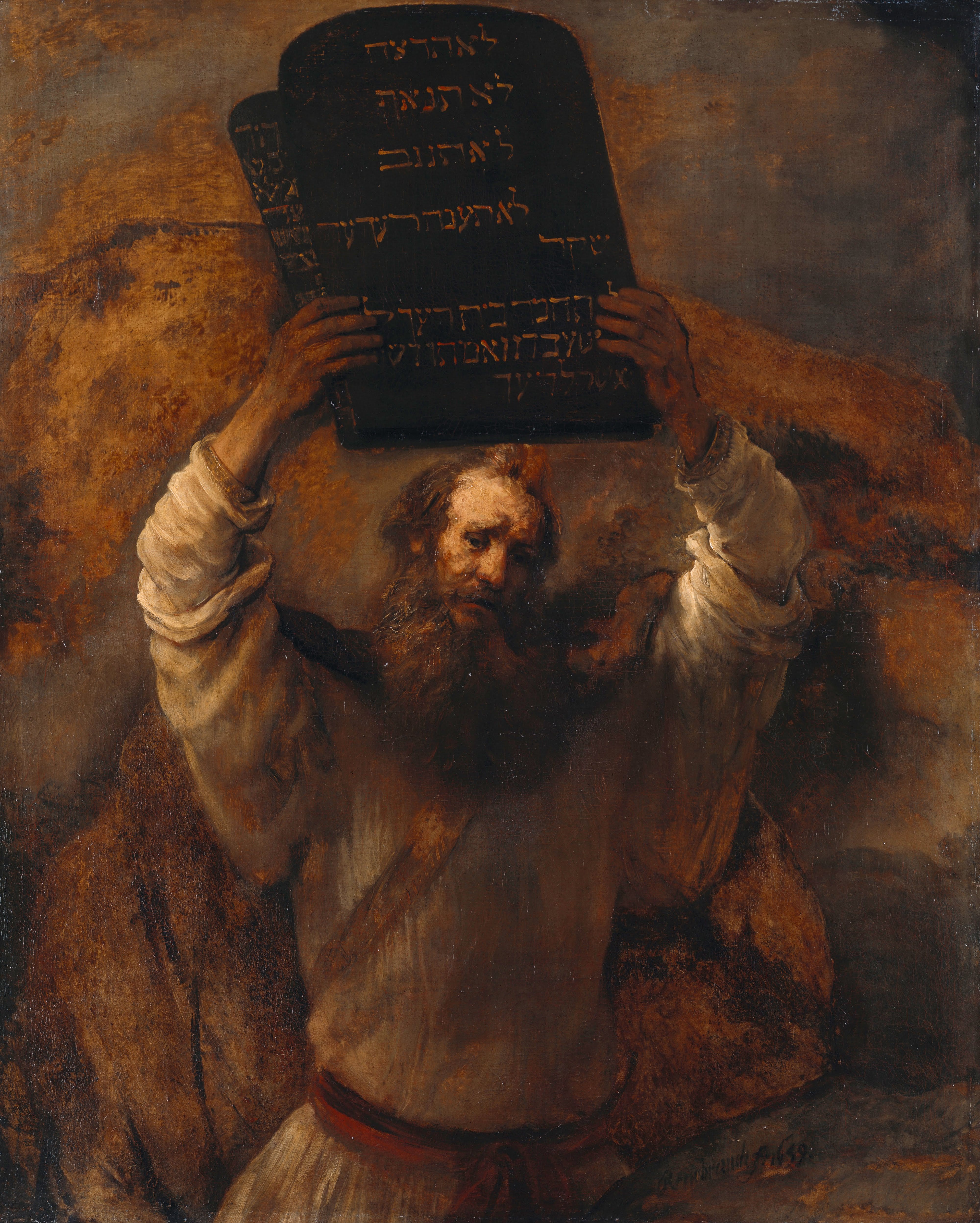
Leviticus 18:22 (NRSV): "You shall not lie with a male as with a woman; it is an abomination."
Leviticus 20:13 (NRSV): "If a man lies with a male as with a woman, both of them have committed an abomination; they shall be put to death; their blood is upon them."
These two verses are the closest “proof” fundamental Christians have where the Bible gives a command on the subject.
As I was researching this topic, I cam across how scholars translate abomination in Hebrew which is to'evah. This word equates abomination as something taboo, or off limits. It is the line a group of people must not cross to stay distinct from other nations. And what interests me is that this same word is used when talking about eating forbidden foods, for idol worship, etc. It’s a ritual boundary to create a distinct culture. It’s not a moral boundary.
These verses are also in the passage known as the Holiness Code. The one that forbids wearing mixed fabrics, planting two different kinds of seeds in one field, trimming the edges of your beard, and eating shellfish. I don’t know about you, but I can’t name a Christian that has followed those rules. The shrimp cocktail gets ordered, the polyester sports jersey gets worn, the beard gets styled (yes, I’m talking to you youth pastors out there), and let’s not forget the death penalty for cursing your parents…that quietly gets ignored by everyone. Perhaps the question we should be asking is not why Leviticus prohibits the act, but why this is the one prohibition Christian’s enforce while the rest is forgotten.
You know what the Leviticus verses do not do? They don’t mention women or orientation (a concept that did not exist at that time). And those verses say absolutely nothing about two people in a committed relationship. Fundamental preachers take a rule about an act and apply it to a person. And the act in question is specifically between men living in a patriarchal world that is obsessed with male honor and domination.
But Paul In The New Testament…
Romans 1:26-27(NRSV): “For this reason God gave them up to degrading passions. Their women exchanged natural intercourse for unnatural, and in the same way also the men, giving up natural intercourse with women, were consumed with passion for one another. Men committed shameless acts with men and received in their own persons the due penalty for their error.”
Now we arrive at the book of Romans in the New Testament. Paul is referring to people who abandoned God for idols. And as the verse says above, God gave them over to their desires…women exchanged natural relations for unnatural ones…men did the same with other men. This passage does describe same-sex behavior and it is for a specific reason.
The point Paul is making is about idolatry. Pagans turned from God and disorderly behavior was the result. Same-sex activity, greed, envy, and gossip. Paul is describing a group of people who he views as having lost their way. Paul describes this using the only categories available to a Jew in the first century. And this passage is grounded in what the Greco-Roman world considered natural.
I wondered how scholars came to this point and it boils down to Paul’s use of the word “nature.” He used the same word in his letter to the Corinthians when he said it is shameful and against “nature” for a man to have long hair. I know plenty of Christian men with long hair who do not feel they are sinning against the natural order of society. It is important to remember that Paul’s understanding of what was natural was shaped by the customs of the world he lived in. That world had no concept of sexual orientation. He does not have the words to affirm or condemn it. What Paul is describing is excess, idolatry, and the violation of the honor codes according to his culture.

The Mistranslation
The last two verses that are used are factually wrong. It is a mistranslation.
1 Corinthians 6:9-10 (RSV 1946): “Do you not know that the unrighteous will not inherit the kingdom of God? Do not be deceived; neither the immoral, nor idolaters, nor adulterers, nor homosexuals, nor thieves, nor the greedy, nor drunkards, nor revilers, nor robbers will inherit the kingdom of God.”
1 Timothy 1:9-10 (RSV 1946): “...the law is not laid down for the just but for the lawless and disobedient, for the ungodly and sinners, for the unholy and profane, for murderers of fathers and murderers of mothers, for manslayers, immoral persons, sodomites, kidnapers, liars, perjurers, and whatever else is contrary to sound doctrine.”
In these verses, Paul lists the people who will not inherit the kingdom of God. Starting with the RSV bible, translators began to combine two words in that list into the single English word “homosexuals.” These two words in Greek are malakoi and arsenokoitai. Neither word means what the combined translation implies.
The literal translation of Malakoi means soft. Let’s go back to the world it was used in. In that time, it was a broad insult. Malakoi could mean self-indulgent, weak, morally lax, lacking discipline, or effeminate. Like a man who lived in luxury or gave in to all of his desires. Saying it refers to gay men is a modern imposition on a ancient slur.
Then we have Arsenokoitai. This is a rarely used word. It barely appears in Greek before Paul. Some scholars think he made the word up. This idea stems from the Greek translation of Leviticus itself because the prohibition against a man lying with another male puts the words for “male (Arsēn)” and for “bed (koitē)” right next to each other. If you combine those two Greek words you get arsenokoitai. Paul is probably reaching back to the Leviticus which doesn’t matter because I have already shown how Leviticus does not mean what we were taught.
This term still targets an act, in a world with no concept of orientation. And the actual same-sex behavior visible in Paul’s world was exploitative in nature. Acts such as older men with enslaved boys, prostitution, and the powerful taking advantage of the vulnerable. We cannot enter Paul’s head at the time he was writing, but it is safe to say what he is referring to is nowhere near a loving modern relationships we know today.
There is a facinating documentary on this exact subject called 1946: The Mistranslation that Shaped a Culture. It goes deep into the history and uncovers when the term homosexual was added to an English Bible translation. The term didn’t exist until 1946. And the astounding thing is, after the translation appeared, the chairman of that committee acknowledged (in writing!) that the single word homosexual was not a correct interpretation of the Greek, and later editions of the translation changed it.
The 1946 interpretation did not invent anti-gay theology, but it shows how a translation mistake, printed as the word of God, can shift an entire culture. These translations were based on that mistranslation.
RSV (1946) — "homosexuals"
RSV Catholic Edition (1966) — "homosexuals"
NASB (1971) — "homosexuals"
Living Bible (1971) — "homosexuals"
NKJV (1982) — "homosexuals"
NIV (1984) — "homosexual offenders"
ESV (2001) — "men who practice homosexuality"
RSV Second Catholic Edition (2006) — "homosexuals"
You can see how the damage is done.
What the Bible Never Says
Besides the verses, did you know there is no word in biblical Hebrew or Greek for gay, lesbian, or straight. Orientation was not thought about in the ancient world. It was all based on actions. Actions were how power was demonstrated. The entire modern fundamental movement is building a debate with terms the original authors had no concept of.
More importantly in my view, the man himself on which the entire faith revolves around (Not Paul, although if you thought that then you have read my other substacks), Jesus says absolutely nothing about same-sex relationships. Not a single word. The one and only person Christians claim to follow focused on wealth, hypocrisy, judgment, and the treatment of the poor. If your asking WWJD?, there are no statements regarding any of the issues his modern followers have made a defining test of faith. Does that not make you stop and think?
The Better Question
Now you know. Every verse fundamental Christians, MAGA preachers, your Aunt Marge, bring up in defense of their view is either a story about rape and domination, a purity law from a list of ignored commands, a description of idolatry, or a pair of mistranslated Greek words. Not a single verse describes, condemns, or even conceptualizes two people of the same sex loving each other. That relationship is not in the Bible in any shape or form. The authors wouldn’t discuss a topic they had no conception of.
I think Christians should stop asking what the Bible says about homosexuality. Many of us have a baseline question that helps us weigh these topics. Does this cause harm? A committed, consensual, loving relationship harms no one. The harm comes when someone uses a single verse to strip another person of dignity, family, belonging, and safety
I know many of you agree with me, but I also know there are many still questioning their faith and scared to leave what they feel is a solid foundation. I’m here to say there is a better, more honest place to stand. These six verses do not mean what we were told in the pew. They never did. And a theology that has to distort it’s sacred text in order to keep wounding people was never coming from a “loving” God to begin with.
A Field Guide for the Conversation
If you struggle with these conversations, just know you are not alone. When I talk with people who still hold their fundamental beliefs, my goal is not to win the debate. That doesn’t happen in a conversation. My goal is to bring up facts that raise honest doubt. Don’t feel descourage. These conversations to change people over time. After all, you to once believed a talking snake tempted a woman to eat a fruit that cause the downfall of the world. You’ve come a long way. Give others the space to do the same.
Here are some examples of things that will come up in conversation.
They say: The Bible clearly says homosexuality is a sin.
You answer: I use to believe that too. I went back and looking into the original text. Have you ever looked at the original words? The English word homosexual did not appear in any Bible until 1946, and the chairman of that translation committee later admitted it was a mistake. Would you be open to looking at the history together?
They say: Leviticus says it is an abomination.
You answer: Yes the text does say that. Did you notice it is in the same list that bans shellfish, mixed fabrics, and trimming your beard. It also says there is a death penalty for cursing your parents. What makes this rule important enough to ignore all the others in the same chapter?
They say: Romans 1 could not be clearer.
You answer: Did you know that Paul is using this story to talk about idolatry, and it puts people into the categories Paul’s had available to him at the time. Back then, there was no concept of sexual orientation at all. Paul uses that same word, natural, to argue that long hair on a man is shameful in another letter. Why can we assume a letter from two thousand years can relate perfectly to today’s world?
They say: I do not hate anyone. I just think acting on it is a sin.
You answer: Would you say the same to a straight couple. Would a husband and wife agree to love each other but never express it? For a gay person that is a sentence of lifelong isolation. Can love be a sin if it harms no one?
Again, you will not change their mind right away so don’t think that is the goal. The point of these conversations is to make certainty a little less certain. Curiosity does the rest, on its own timeline.
If you want to support the work, you can become a paid subscriber as a way to help keep it going, and I am grateful for every person who does. It is $6.66. You already get the joke.
And if you cannot spare it, do not give it a second thought. Pull up a pew anyway and sit as long as you like. The only thing I will ever ask of the free seats is that you save a spot for the next person who is just now starting to ask questions, and let them know this room exists.
We sat in the same pew once. I am glad we are sitting in a better one now.
Sources & Further Reading
1946: The Mistranslation That Shifted a Culture, documentary (on the 1946 translation and the committee correspondence; useful, though best paired with the caveat that anti-gay readings predate it). WATCH HERE
God and the Gay Christian, by Matthew Vines (an accessible, scripture-first case for the affirming reading, written from inside evangelicalism).
Changing Our Mind, by David Gushee (a leading evangelical ethicist walks through his own move from condemnation to full affirmation).
UnClobber, by Colby Martin (a pastoral, verse-by-verse tour of all six passages).
Walking the Bridgeless Canyon, by Kathy Baldock (the historical and cultural story of how LGBTQ people were pushed out of the church, and a key source on the 1946 translation history).
The New Testament and Homosexuality, by Robin Scroggs (the older scholarly work that lays out the likely derivation of arsenokoitai from the Greek of Leviticus and the exploitative shape of same-sex behavior in Paul’s world).