

The Sin That Wasn't There
Original sin is not in Genesis. It is a theologian's later patch.
We are told that every human is born broken, condemned by an inherited guilt that traces back to a garden. But Genesis never says that. The doctrine of original sin was built centuries later, leaning partly on a Latin mistranslation, and both Judaism and the Eastern church read the same story without it.
You were told that the human race is born guilty. Not capable of guilt, not prone to it, but already condemned at birth, stained from the very first breath by something that happened in a garden at the dawn of time. This is presented as the bedrock of the whole system, the reason every person needs rescuing before they have done anything at all. Now open the third chapter of Genesis, the chapter where it supposedly happens, and look for it. It is not there.
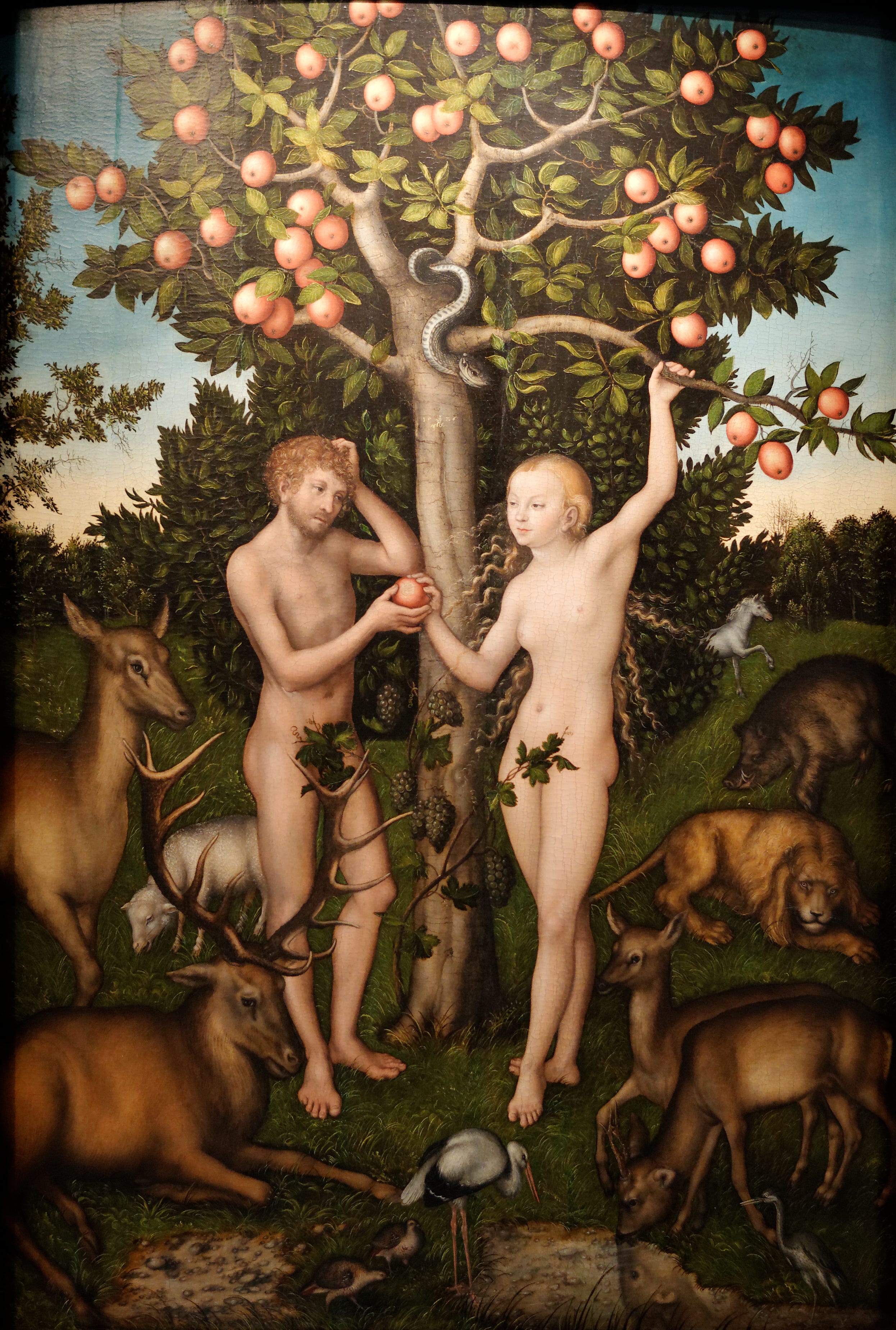
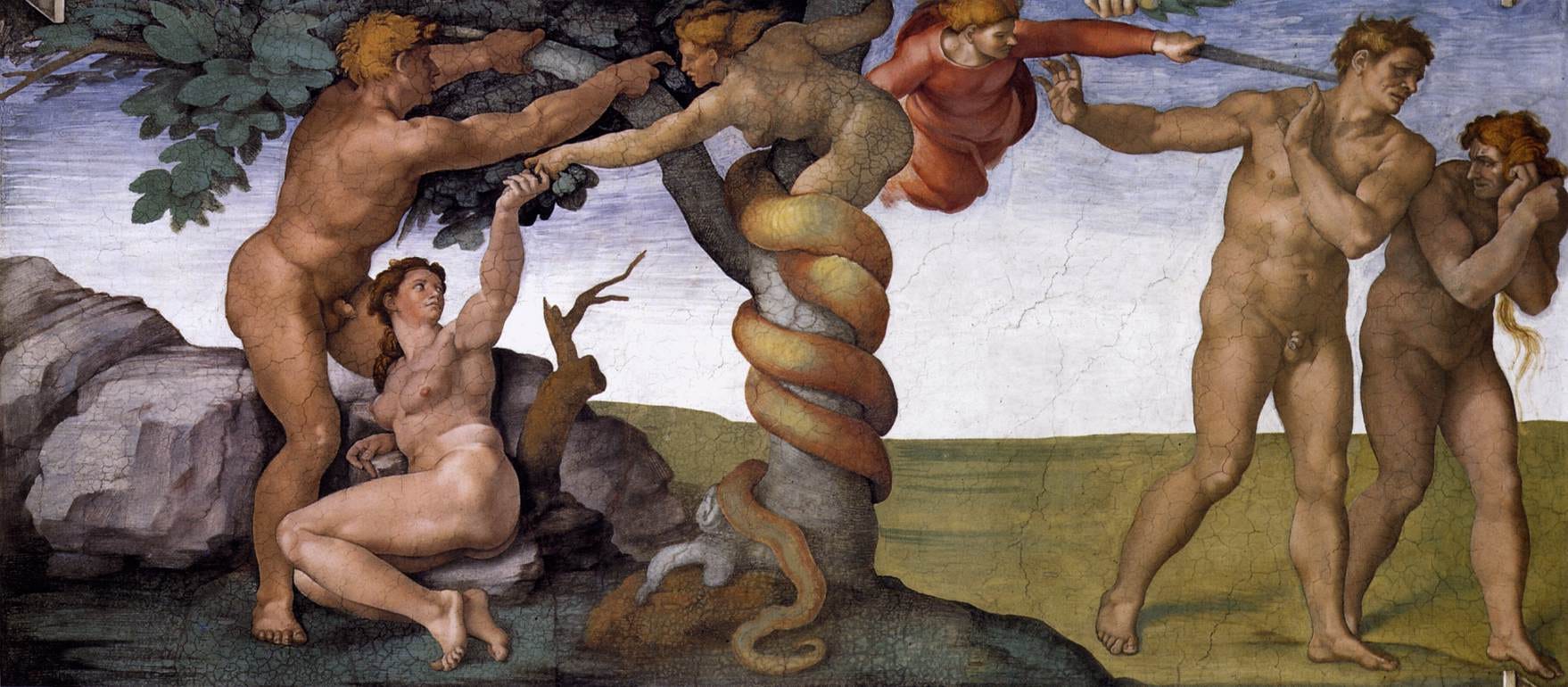
Read the story carefully. The man and the woman eat the forbidden fruit. There are consequences, real ones: pain, hard labor, a strained relationship with the ground, expulsion from the garden, and mortality. But nowhere does the text declare that their guilt is biologically transmitted to every descendant who will ever live. There is no verse announcing that all future humans are born condemned because of what these two did. The doctrine that has been hung on this chapter is simply not stated in the chapter.
There is an even sharper detail. The word sin does not appear anywhere in the Eden story at all. It shows up for the first time in the very next chapter, in the story of Cain, where it is described as something crouching at the door that a person can and should master. The Bible’s first explicit mention of sin frames it as a temptation to be resisted by choice, not as an inherited condition stamped onto every newborn. The concept that was supposedly established in the garden is introduced afterward, and introduced as a matter of personal responsibility.
So if the doctrine is not in the text, where did it come from? Overwhelmingly, it came from one enormously influential theologian working around the year 400, roughly four centuries after Jesus and many centuries after Genesis was written. He developed the framework of inherited guilt in the course of a fierce argument with a rival who insisted that human beings are born morally free, capable of choosing good without a hereditary stain. The theologian of inherited guilt won that argument, his rival was condemned, and the doctrine was locked into Western Christianity by a council not long after. A teaching now treated as the eternal diagnosis of the human condition was, in fact, the victorious side of a specific theological dispute with a date attached.
And the victory leaned on a mistake. The crucial supporting verse comes from Paul’s letter to the Romans, where Paul writes that death spread to all people, and then a short phrase that determines everything. In the original Greek, that phrase most naturally reads because all sinned. It describes people sharing in death because they themselves sin. But the Latin translation that dominated the Western church for a thousand years rendered the same phrase as in whom all sinned, which could be read to mean that all of humanity somehow sinned inside Adam, present and guilty in his single act. The theologian who built the doctrine was reading that Latin version. A translation slip became a load-bearing wall of an entire religion’s view of human nature.
The clearest proof that the doctrine is a later interpretation, and not the plain meaning of the text, is that other readers of the very same scriptures never adopted it.
Judaism has been reading the Genesis story far longer than Christianity has existed, and Judaism has no doctrine of original sin. In the Jewish understanding, human beings are born with competing inclinations toward good and toward evil, and the moral life is the work of choosing between them. There is no inherited guilt, no birth-stain requiring rescue. The same chapter, read by the people whose ancestors wrote it, simply does not produce the doctrine.
The Eastern Orthodox churches, which split from the Western tradition long ago, read the story differently as well. They speak of inheriting mortality and a tendency toward corruption from the first humans, but they reject the specifically Western idea that every infant inherits Adam’s guilt and stands condemned for it. The notion of being born guilty is not the universal Christian reading. It is the particular Western one, traceable to a particular theologian, a particular argument, and a particular mistranslation.
The machinery the doctrine required is revealing in itself. Having decided that guilt was inherited, the tradition then needed a way to pass it down, and it located that mechanism in sex. The same theologian taught that the stain was transmitted from parent to child through the act of procreation, which is part of how sexual desire itself came to be treated as inherently suspect in Western Christianity. A newborn was counted guilty, before it could act, because of how it had been conceived. This is the anxiety behind the long insistence on baptizing infants as fast as possible, to wash away a guilt the child had no chance to earn, and behind centuries of dread about what became of babies who died first. An entire apparatus of fear around birth, sex, and unbaptized children was constructed on top of a doctrine that the founding text never states.
It is worth noticing one more later addition while we are here. In Genesis, the tempter is simply described as the most cunning of the wild animals, a talking serpent. It is never identified as Satan or the devil anywhere in the story. That identification was layered on much later by other writers reading the tale through a developed theology of cosmic evil. The familiar villain of the fall, like the doctrine of inherited guilt, is something brought to the text rather than found in it.
All of this matters because the entire machine runs on the premise. If you are not actually born guilty, then you do not need the specific rescue that was sold to you on those terms. The diagnosis came centuries after the supposed disease, constructed by the same tradition that was offering the cure. Strip away the doctrine and the urgent transaction at the center of the faith loses the condition it was built to treat.
A flaw invented around the year 400, propped up by a mistranslated phrase and rejected by readers both older and parallel to the tradition that produced it, cannot be the thing that condemned you at the beginning of time. You were not born broken. You were told you were, by people who arrived very late to a story that never said it.
Recognizing this does not require dismissing everything the tradition has ever said about human failure or moral struggle. It requires only that we stop treating one late, contested, translation-dependent doctrine as if it were the obvious and original meaning of an ancient story that, read on its own terms, says nothing of the kind.
If you want to support the work, you can become a paid subscriber as a way to help keep it going, and I am grateful for every person who does. It is $6.66. You already get the joke.
And if you cannot spare it, do not give it a second thought. Pull up a pew anyway and sit as long as you like. The only thing I will ever ask of the free seats is that you save a spot for the next person who is just now starting to ask questions, and let them know this room exists.
We sat in the same pew once. I am glad we are sitting in a better one now.
Sources & Further Reading
Adam, Eve, and the Serpent by Elaine Pagels (on how the Genesis story was reinterpreted over the early centuries and how the doctrine of original sin took shape).
Original Sin: A Cultural History by Alan Jacobs (a wide-ranging account of how the idea developed and spread across Western thought).
The HarperCollins Study Bible annotations on Genesis 3 and Romans 5 (mainstream notes on the absence of inherited-guilt language in the text and the translation history of the key verse).