

The Prophecy Machine
How the Gospels manufactured fulfilled prophecy by yanking verses out of context.
We are told that Jesus fulfilling ancient prophecy is overwhelming proof of his identity. But the Gospel writers built those fulfillments by lifting Old Testament lines out of context, repurposing passages that were never predictions, and in one case quoting a verse that does not exist anywhere in the Bible.
The argument from prophecy is supposed to be the closer. Jesus fulfilled the ancient predictions, the claim goes, so precisely and so many times that coincidence is impossible and divine design is the only explanation. It sounds powerful until you do one simple thing: open the original passages the Gospels are quoting and read what they actually say in their own setting. Do that, and the machine becomes visible. The Gospel writers were not discovering predictions that came true. They were starting with the conclusion and combing the scriptures for lines they could bend to fit it.
The Gospel of Matthew is the clearest case, because it announces its method openly, pausing again and again to say that some event happened in order to fulfill what was written. Trace each of those quotations back to its source and a pattern emerges immediately. Over and over, the line being quoted as a prediction was never a prediction at all.
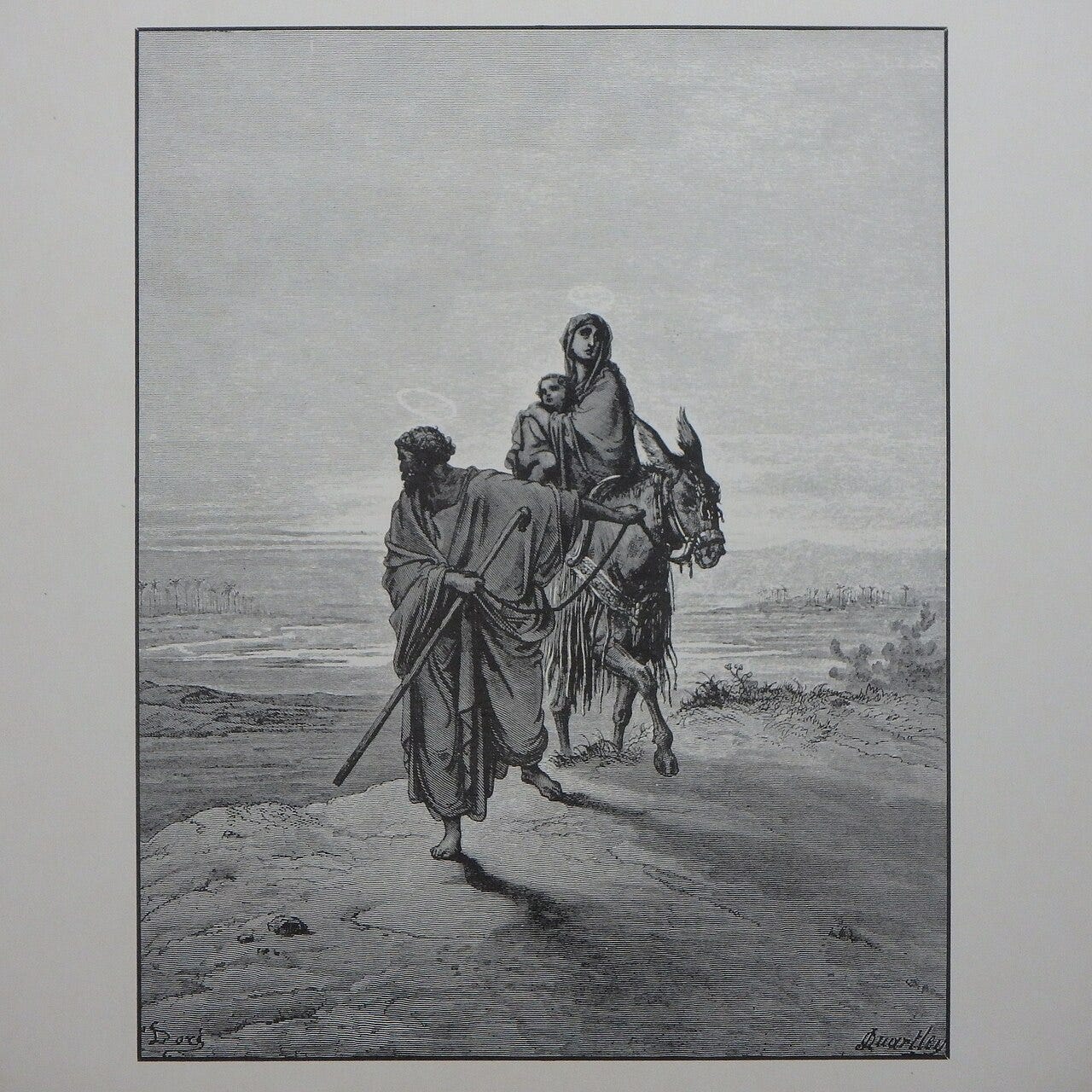
Take the flight into Egypt. Matthew says the family fled there so that a prophecy would be fulfilled, the words out of Egypt I called my son. Now open the passage he is quoting, in the book of Hosea. In its own context it is not about the future and not about a messiah. It is God looking back on the Exodus, calling the nation of Israel his son whom he led out of Egypt centuries earlier. It is a backward glance at national history, in the past tense, with no coming savior anywhere in view. Matthew took a sentence about the nation’s past and reinstalled it as a forecast about one child.
The same move happens with the verse about a young woman conceiving and bearing a son, which Matthew presents as a prediction of the virgin birth. Read in its own chapter, that line is a sign given to a king of Judah, centuries before Jesus, about a child to be born in the king’s own time as a marker that a current military threat would soon pass. The whole point of the sign was that it would be fulfilled quickly, in the king’s own day, as reassurance to him. It was not a prophecy waiting seven hundred years for a different child. It was a message about an immediate situation, repurposed long after the fact.
Then there is the quotation that gives the whole game away, because it does not exist. Matthew says the family settled in Nazareth so that the prophecy would be fulfilled that he would be called a Nazarene. There is no such verse anywhere in the Hebrew scriptures. No prophet ever wrote it. You can search the entire Old Testament and never find the line Matthew claims to be fulfilling. A fulfilled prophecy that has no original is not evidence of anything except an author confident that his readers would not check.
Matthew is not alone in the technique. After the slaughter of the infants, he quotes a line about a voice heard in Ramah, weeping and refusing to be comforted. In its original setting that passage is about the Babylonian exile, mourning a nation carried off into captivity. It has nothing to do with murdered babies in Bethlehem. It was lifted because the emotional note matched, not because it predicted the event.
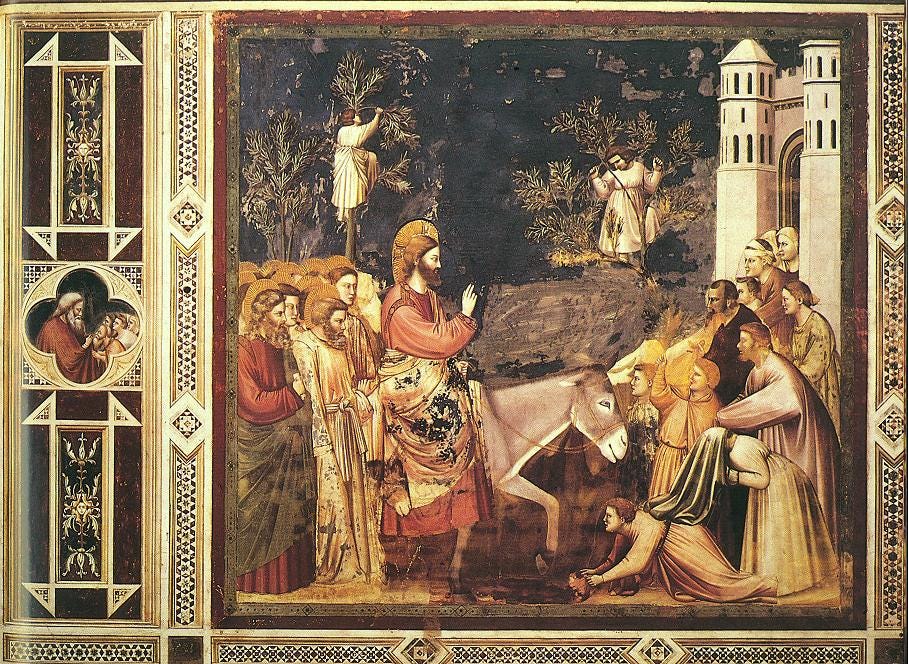
One of the most telling examples is the entry into Jerusalem. An old passage describes a king coming humbly, riding on a donkey, on a colt, the foal of a donkey. To anyone familiar with Hebrew poetry, this is a single animal described twice in parallel, a standard poetic doubling where the second line restates the first. Matthew appears to read it as two separate animals, a donkey and also a colt, and so he stages the scene with Jesus somehow mounted on both at once. The author took a poetic repetition literally and built an awkward tableau to match it. That is not prophecy shaping history. That is a misreading shaping a scene.
There is a broader fact underneath every one of these examples. The passages the Gospels present as messianic predictions were, for the most part, never understood as predictions about a messiah by the people who wrote and preserved them. In their original setting they were laments, reflections on national history, signs for a particular king in a particular crisis, or instructions for the present moment. The idea that they secretly pointed forward to Jesus is a lens applied from outside, by a later movement that already held the conclusion and went hunting for confirmation. Remove that backward-looking lens and the verses snap back into their plain, local, first meanings, none of which is sitting in suspense waiting for a savior to arrive centuries down the road.
The pattern reaches even into the crucifixion. Details in the passion narratives, the dividing of the garments, the casting of lots, the offer of sour wine, the cry of abandonment, line up closely with the wording of certain psalms. But those psalms are laments, the cries of a suffering person, not predictions of a future execution. The most economical explanation is that the storytellers built the details of the scene out of the language of the psalms, so that the account would echo scripture. The prophecy did not generate the event. The scripture generated the story.
This is the engine, laid bare. Begin with the fixed conclusion that Jesus is the promised one. Then search the older writings for any phrase, in any context, that can be detached from its original meaning and reattached as a prediction. A line about the nation becomes a line about the messiah. A sign to an ancient king becomes a forecast of a virgin birth. A lament becomes a script. A poetic repetition becomes two donkeys. A verse that does not exist gets cited anyway.
It is worth being fair about the historical context, because honesty requires it. This way of reading scripture, mining older texts for hidden present-day meaning regardless of original intent, was a common interpretive practice in the ancient world. The Gospel writers were not necessarily setting out to deceive. Many of them genuinely read their scriptures this way, convinced that the deeper meaning had been there all along, waiting. But that is exactly why the modern apologetic fails. The texts were not specific predictions that came true. They were existing lines, creatively repurposed after the fact, by the standards of a very different reading culture.
So when the fulfilled-prophecy argument is offered today as objective proof, as a mathematical improbability that could only be divine, it collapses under a single test: go read the originals. When you write the ending first and then go shopping through the scriptures for clues, everything you find will seem to fit, because you selected it precisely for fitting. That is not prediction. That is editing, performed in reverse, and then presented as foresight.
Recognizing this does not require contempt for the Gospel writers or the people moved by their accounts. It requires only that we read their proof-texts the way the original authors wrote them, in their own context, and admit that the prophecies were not waiting to be fulfilled. They were chosen, after the fact, to look as though they had been.
If you want to support the work, you can become a paid subscriber as a way to help keep it going, and I am grateful for every person who does. It is $6.66. You already get the joke.
And if you cannot spare it, do not give it a second thought. Pull up a pew anyway and sit as long as you like. The only thing I will ever ask of the free seats is that you save a spot for the next person who is just now starting to ask questions, and let them know this room exists.
We sat in the same pew once. I am glad we are sitting in a better one now.
Sources & Further Reading
Jesus, Interrupted by Bart D. Ehrman (on the Gospel writers’ use and reshaping of Old Testament passages as prophecy).
The Jewish Annotated New Testament edited by Amy-Jill Levine and Marc Zvi Brettler (notes from Jewish scholars on how the New Testament repurposes Hebrew scripture out of its original context).
Who Killed Jesus? by John Dominic Crossan (on how passion-narrative details were generated from the language of the Psalms rather than the reverse).