

The Prayer Audit
What Happened When Science Actually Tested Prayer
Reasoned Reality is incredibly important to me. You will never see a collection plate passed around here for ten percent of your hard-earned money. This historical information should be accessible to everyone. But if you are able to chip in, a monthly subscription of exactly $6.66 is a great way to support. If you are an exvangelical, like myself, you’ll understand my subscription price😊
I am so grateful to have you here, no matter what.
We are taught that prayer changes things, and that countless answered prayers prove it. But when the largest controlled scientific experiment ever conducted on intercessory prayer measured the actual effect, the results were not just disappointing. They were embarrassing.
Prayer is the most universal religious practice on Earth. Christians pray. Muslims pray. Jews pray. Hindus pray. Spiritual-but-not-religious people pray. Nearly every adult in the United States reports praying at least occasionally, and the majority pray daily. Pastors, imams, and spiritual leaders consistently teach that prayer is an active, two-way line of communication with the divine, and that prayers offered in faith are heard and answered. We are told that the believing world is full of medical miracles, surprising recoveries, and dramatic interventions that prove prayer works.
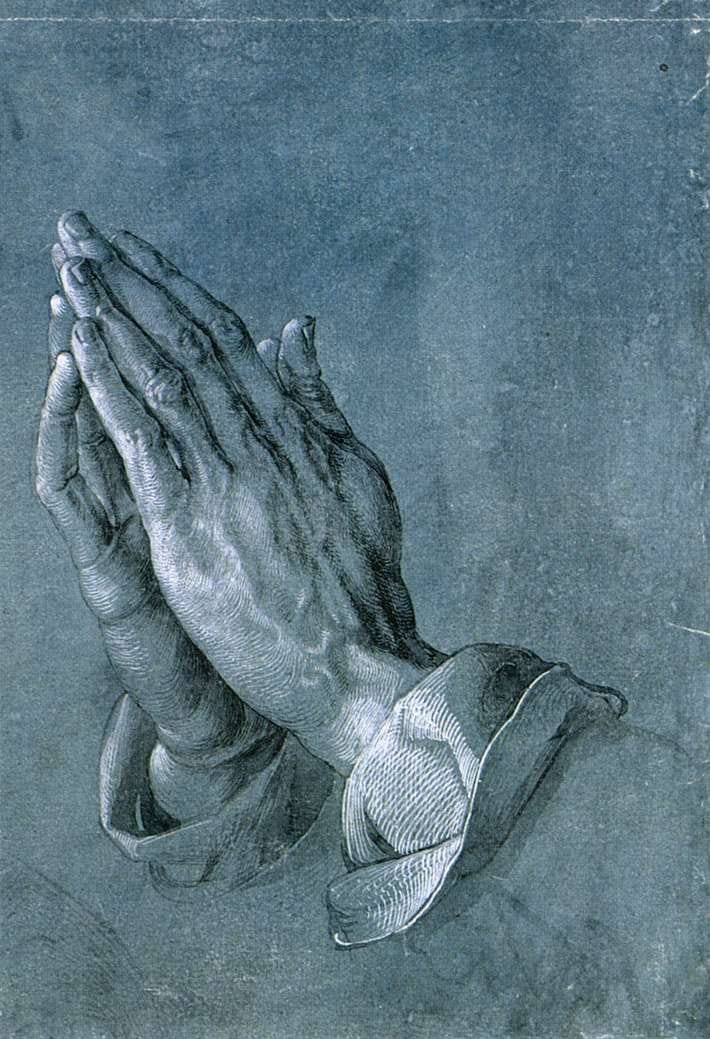
It is a deep, intimate, and culturally pervasive conviction. But there is a massive empirical problem with this storyline.
When prayer is taken out of the realm of personal anecdote and subjected to actual scientific testing, with control groups, randomization, and proper statistical analysis, the effect disappears. Not weakens. Not flickers. Disappears. The most rigorous trials of intercessory prayer ever conducted, including a multimillion-dollar study funded by religious foundations and run at Harvard-affiliated hospitals, have found that being prayed for produces no measurable medical benefit. In one celebrated case, the patients who knew they were being prayed for actually fared slightly worse than the patients who were not.
To understand how this works, we have to start with the very first time someone tried to measure prayer.
In 1872, the British scientist Francis Galton published one of the earliest statistical studies of religious belief in a journal called the Fortnightly Review. Galton noticed that across the Christian world, more people prayed for the longevity and well-being of monarchs than for any other category of human being. Royal families were the targets of millions of intercessions every Sunday across Britain, Europe, and the Empire. If prayer worked, monarchs should be the longest-lived people on Earth.
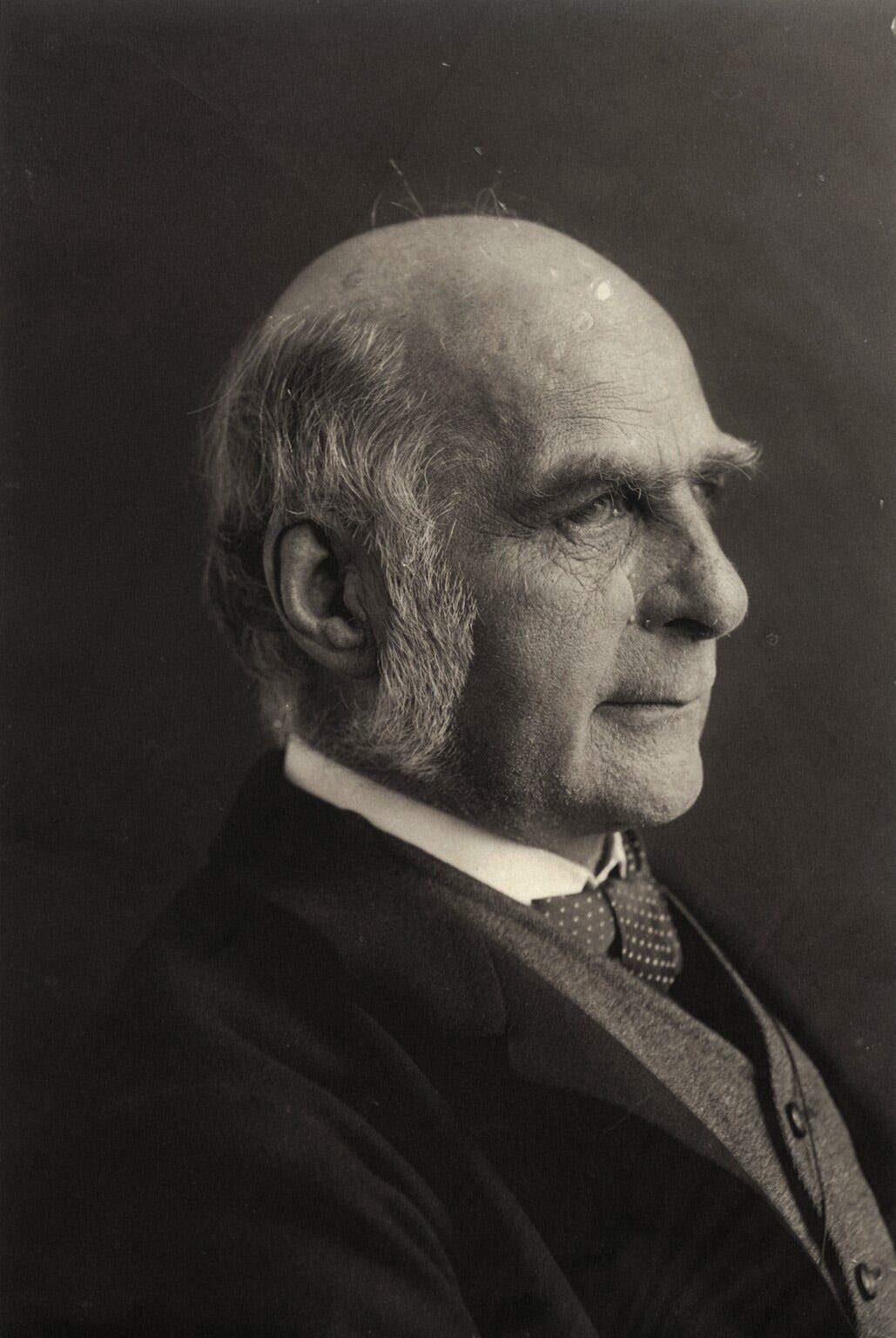
Galton compared the lifespans of monarchs against several control groups, including aristocrats, gentry, and members of various professions. The most-prayed-for population on the continent did not live longer than the unprayed-for. They did not live shorter, either. Prayer simply produced no measurable effect on royal mortality. The most-watched, most-blessed lives in Christendom were statistically indistinguishable from any other privileged set.
Galton’s study was small, exploratory, and easy to dismiss. So in the late twentieth century, religious foundations decided to settle the question with serious science.
The most famous and most thorough of these efforts is known as the STEP study, short for Study of the Therapeutic Effects of Intercessory Prayer. It was launched in 1997, completed in 2006, funded primarily by the Templeton Foundation at a cost of nearly two and a half million dollars, and run by Dr. Herbert Benson at Harvard Medical School and the Mind/Body Medical Institute. The protocol was the strongest ever applied to the question.
Researchers enrolled 1,802 patients undergoing coronary artery bypass surgery at six major hospitals. Patients were randomly divided into three groups. Group one was prayed for by Christian intercessors and did not know whether they were being prayed for or not. Group two was not prayed for and did not know either way. Group three was prayed for and was explicitly told that they would receive prayer. The intercessors, drawn from three different Christian congregations, were given the patients’ first names and last initials and asked to pray for “a successful surgery with a quick, healthy recovery and no complications” for fourteen consecutive days.
The results were definitive.
Patients who were prayed for and did not know it had the same complication rates as the patients who received no prayer at all. The supernatural intervention provided no measurable medical benefit. More remarkably, the patients in the third group, the ones who were told they were being prayed for, had significantly higher rates of post-surgery complications than the patients in either of the other two groups. The current best explanation for this finding is psychological. Patients who knew strangers were praying for them appeared to feel more anxious about their condition, possibly assuming their case must be especially serious if outside intercession had been arranged.
The STEP study was published in the American Heart Journal. It is the largest, best-controlled, peer-reviewed test of intercessory prayer ever conducted. And the answer, paid for by religious institutions hoping for the opposite outcome, was that prayer either did nothing at all or made the patient psychologically worse off.
How can a practice that affects no measurable medical outcome continue to feel so undeniably effective to the people who practice it?
The answer is found in cognitive psychology rather than theology.
The human mind is built to find patterns. It is also built to remember hits and forget misses. When a person prays for a sick loved one and the loved one recovers, the prayer is filed in memory as a vivid, emotionally charged “answered prayer.” When the same person prays for a sick loved one and the loved one dies, the outcome is reframed as “God’s plan” or “God’s mysterious will” or “God’s higher purpose.” Either outcome confirms the system. There is no possible result that counts as evidence of failure. This is the textbook definition of an unfalsifiable belief.
Combine that with selective recall, confirmation bias, the ordinary base rate of medical recovery without prayer, and the social pressure to share recoveries while staying quiet about losses, and you get a culture of “answered prayer” that floats untethered from any actual measurement. The people who believe prayer works are not lying. They are doing what every human brain does when it is not corrected by a control group.
This is exactly the kind of subjective evidence that controlled studies are designed to override. And the controlled studies have been done. Galton in 1872. Byrd in 1988. Harris in 1999. Aviles in 2001. Benson and the STEP team in 2006. The collective verdict is consistent. When prayer is properly tested, the effect either vanishes or, in the most rigorous version, mildly reverses.
The cultural authority of prayer did not come from controlled testing. It began with personal anecdote and emotional conviction. It evolved through centuries of confirmation bias and selective storytelling. It was decorated with the most-watched testimonies of recoveries that would have happened anyway. And it was ultimately put to the test, in the largest study ever attempted, and quietly failed every metric that mattered.
Recognizing this scientific record does not have to dismantle the personal value many people find in prayer as meditation, as reflection, or as community. But it does require us to be honest about the empirical, repeatable, and well-documented absence of any measurable supernatural effect on the lives we are praying for.
Sources & Further Reading
Study of the Therapeutic Effects of Intercessory Prayer (STEP) in Cardiac Bypass Patients by Herbert Benson et al., American Heart Journal, 2006 (The full peer-reviewed publication of the largest controlled study of intercessory prayer ever conducted).
Statistical Inquiries into the Efficacy of Prayer by Francis Galton, Fortnightly Review, 1872 (The original nineteenth-century statistical investigation of prayer that opened the door to all subsequent studies).
Why Won’t God Heal Amputees? by Marshall Brain (A widely circulated philosophical treatment of why the patterns of “answered” and “unanswered” prayer point toward statistical and psychological causes rather than supernatural ones).
You will never see a collection plate passed around here for ten percent of your hard-earned money. This historical information should be accessible to everyone. But if you are able to chip in, a monthly subscription of exactly $6.66 is a great way to support.