

The Lucifer Mistake
The devil's most famous name is a translation error you can trace step by step
Reasoned Reality is reader-supported. Everything I publish here is free, and it will stay that way. No paywall, no guilt, no collection plate asking for ten percent of your paycheck. What a subscription actually pays for is time: the reading, the fact-checking, and the hours it takes to do this honestly. If you want to help fund more of it, a subscription is exactly $6.66 a month. If you came out of evangelicalism like I did, you already get the joke. Either way, I am glad you are here.
We are taught that Lucifer is the devil’s true name, the proud angel who fell from heaven. But that name appears exactly once in the entire Bible, it is not a name and not the devil in the original language, and you can follow the mistake word by word until a common term for the planet Venus hardens into the personal name of Satan.
Here is something most people never realize. The devil does not actually have a name in the Bible. Every word used for him is a title or a description, not a personal name. Satan means the adversary, or the accuser. Devil comes from a Greek word meaning the slanderer. He is also called the tempter, the evil one, the great dragon, the ancient serpent. Every single one of those is a job description, a role, not a name like Michael or Gabriel. And the one word that does look like a genuine personal name, Lucifer, turns out to be the biggest mistake of them all.
Even the word Satan, in its earliest appearances, is not a name. In the book of Job, the figure called the satan is a member of the heavenly court, something like a prosecutor or a roving inspector who reports to God and acts only with God’s permission. The Hebrew even keeps the definite article in front of it, the satan, the way you would write the accuser rather than a personal name. He is a function within the divine council, not a rival villain with a name on a wanted poster. The personal, named archenemy of God that people picture today is a later construction, assembled over centuries, and the name at the center of that picture was an accident.
So open the fourteenth chapter of Isaiah and go looking for Lucifer. You will find the word exactly once, in older translations like the King James, at the twelfth verse. Once. In the entire Bible. The whole towering legend of Lucifer the fallen angel hangs on a single line in a single chapter, and when you read that line in the language it was written in, the legend falls apart in your hands.
The Hebrew phrase is helel ben shachar. It means shining one, son of the dawn. It is a poetic name for the morning star, the planet Venus, which blazes brilliantly in the eastern sky just before sunrise and is then swiftly washed out and erased by the light of the rising sun. It is not a name. It is not an angel. It is not the devil. It is a vivid image of a star that climbs high and dazzling and is then snuffed out the instant the real day arrives.
And the passage could not be clearer about who it is actually describing. The chapter opens by announcing exactly what it is. It is a taunt, a mocking victory song, to be sung against the king of Babylon. A human tyrant. The shining-one-son-of-the-dawn image is a metaphor for that king, a sneer at a ruler whose glory rose high and brief and is about to be extinguished like a morning star at dawn.
The chapter does not leave it ambiguous. The figure is called the man who made the earth tremble, who shook kingdoms and would not let his prisoners go home. He is openly mocked for his arrogance. And then he is described dying. He is brought down to the grave, to the depths of the pit, his corpse laid on a bed of maggots and covered with worms, gawked at by the dead kings who went before him. A devil does not die and rot in a tomb. A defeated emperor does. There is no Satan, no hell, and no fallen angel anywhere in the chapter. There is a dead king being insulted.
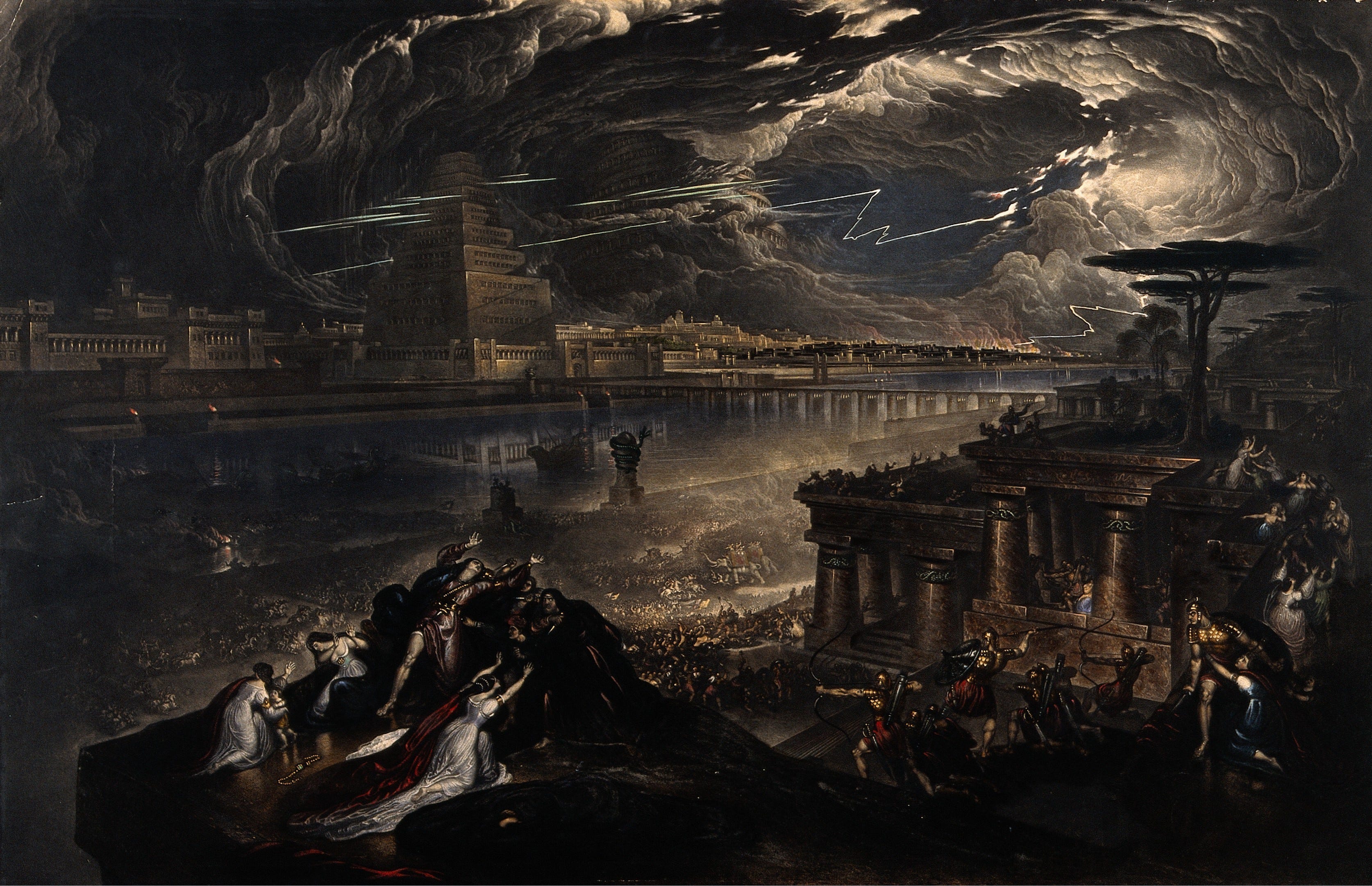
The lines that later readers seized on are the king’s boast. The poem puts grand words in his mouth: I will ascend to heaven, I will raise my throne above the stars of God, I will make myself like the Most High. And then the crushing reply: but you are brought down to the grave, to the depths of the pit. In context this is the hubris of a conqueror who imagined himself a god, answered by the reality of his own corpse. Many centuries later, those same lines would be lifted out and reread as the rebellion of a proud angel against heaven. In Isaiah, they are the bragging of a man who is about to be worm food.
There is even an older myth humming underneath the poem. The image of a dawn-star figure trying to climb to the highest throne of the heavens and being hurled back down echoes a Near Eastern myth about the morning star, the bright light that rises toward the sun’s place and is always overwhelmed before it can get there. The poet borrowed that mythic flavor to ridicule the Babylonian king’s ambitions. Ironically, that very flavor, the climbing and the falling, is part of what later made the passage so easy to misread as the story of an angel cast out of heaven. But the poet was using an old star-myth as a weapon against a king, not writing the biography of the devil.
So how does a dead Babylonian king become Lucifer, the fallen archangel of a thousand sermons? Not in a single leap. Through a slow chain of translation, language by language, where you can watch the error harden at each step.
The first step is Greek. When the Hebrew scriptures were translated into Greek, the translators rendered helel with their ordinary word for the morning star, the dawn-bringer. Still a star. Still a description of Venus. Still nothing to do with the devil.
The second step is Latin, and this is where the fingerprint gets left. When the scriptures were translated into the Latin that would govern Western Christianity for a thousand years, that Greek morning-star word was rendered as lucifer. And here is the fact that dissolves the whole legend. Lucifer was not a name. It was a perfectly ordinary Latin common noun. It meant light-bringer, and it was the everyday Latin word for the planet Venus appearing as the morning star. Roman writers used it to mean the actual star in the actual sky. The translator was not naming the devil. He was translating the words morning star into the normal Latin for morning star.
The proof that lucifer was a common noun and not a name is sitting elsewhere in the very same Latin Bible. The same word is used in other places for the morning star in an entirely positive sense. Most strikingly, the New Testament calls Christ himself the bright morning star, and in the Latin that phrase uses the same root. If lucifer were the devil’s personal name, then the Bible would be handing the devil’s name to Jesus. It plainly is not. It is using a common word for a common star, in several places, about completely different subjects.
The hardening of that common noun into a proper name happened gradually, in the hands of later Christian writers. They took this passage, a taunt about a dead king, and fused it with two unrelated lines from the New Testament: a saying about seeing Satan fall like lightning from the sky, and a vision of a great dragon being thrown down from heaven. Isaiah 14 never mentions Satan, the lightning saying never mentions Isaiah, and the dragon vision never mentions either. But welded together by readers determined to find a single story, the three fragments produced one dramatic narrative: a proud angel who tried to ascend, rebelled, and was cast down to earth. And the Latin word sitting in the Isaiah passage, lucifer, naturally became the name of the villain in that newly assembled tale.
The capital letter finished the job. When the passage was carried into English in the King James translation, the translators simply kept the Latin word and capitalized it, Lucifer, so that on the page it now looked like a proper name rather than the plain description it had always been. From there the name marched into hymns, sermons, and eventually a famous English epic about paradise lost, in which Lucifer the fallen archangel became a fixed and vivid character in the Western imagination. A common Latin noun for a planet had completed its long journey into the personal name of the devil.
Modern translations have quietly reversed the error. Open almost any contemporary Bible to that same verse and the word Lucifer is simply gone, replaced by what the Hebrew actually says: Day Star, or morning star, or shining one. The translators went back to the original phrase and removed the accidental name that a chain of older translations had smuggled in.
And this is not some fringe modern theory invented by skeptics. The two men who launched the Protestant Reformation, the figures most committed to reading scripture seriously and on its own terms, both rejected the devil reading centuries ago. In his commentary on Isaiah, John Calvin wrote that the interpretation of this passage as referring to Satan had arisen from ignorance, and he insisted the prophet was speaking about the king of Babylon. Martin Luther, lecturing on the same chapter, likewise treated it as a poem about the Babylonian king and not about the devil at all. The champions of taking the Bible at its word looked straight at this verse and said plainly that it was never about Satan.
Step back and you can see the entire shape of the mistake at once. In the beginning there was no name. There was a Hebrew phrase for the morning star, deployed to mock a human king. A Greek translation kept it a star. A Latin translation rendered it with an ordinary word for that same star. Later writers welded the verse onto unrelated passages and constructed a fallen angel out of the splice. An English Bible capitalized the Latin word into a name. A poet gave the name a face and a voice. And so a planet became a demon.
The lesson here is far bigger than one word. It is a clean, traceable example of how doctrine actually gets made. Not delivered intact from above, but assembled over time, across languages and centuries, out of translation choices, creative fusions of unrelated texts, and the slow process by which a metaphor hardens into a literal fact. The fallen angel named Lucifer is not in the Bible. He is a thousand-year composite, and unlike most such composites, this one left a paper trail clear enough to follow seam by seam.
So the next time someone invokes the devil’s name with total confidence, it is worth remembering where that name actually comes from. It is borrowed from a planet. The planet was a metaphor for a dead and arrogant king. The two most famous reformers in the history of Christianity already pointed this out and were ignored. The single most recognizable name for evil in the Western world is, at bottom, a clerical error that nobody bothered to correct for over a thousand years.
Recognizing this does not require believing or disbelieving in anything supernatural. It asks only that we follow a word honestly back to its source, and admit what we find when we get there: that the devil’s most famous name was never his, was never a name to begin with, and was never about the devil at all.
Sources & Further Reading
Satan: A Biography by Henry Ansgar Kelly (a careful scholarly account of how the figure of the devil, including the Lucifer mistranslation, was assembled over time).
The Origin of Satan by Elaine Pagels (on how the adversary developed from a minor heavenly role into the cosmic enemy of later tradition).
Commentary on Isaiah by John Calvin (the primary source for his statement that reading Isaiah 14 as Satan arose from ignorance, and that the passage concerns the king of Babylon).
The HarperCollins Study Bible annotations on Isaiah 14 (mainstream notes identifying the chapter as a taunt against the Babylonian king and the Day Star as the morning star).
Reasoned Reality is reader-supported. The work stays free on purpose. Questions like these belong in front of as many people as possible, not behind a paywall. Any support chipped in is genuinely appreciated. If not, read freely and share widely. I'm grateful you're here, no matter what.
You found the part nobody preaches, Vel. In Job the satan is not an enemy, he is the prosecutor in God’s own court, and God opens the bet by pointing Job out to him. The dead children are just collateral. And by Revelation the text literally says Satan must be released again. An enemy you are required to set loose was never really the enemy. Glad you are here!
that's quite a lovely painting. The whole thing about the "devil" is bizarre. as you demonstrated so well, the naming is all over the place. The incident with the "satan" in Job begs the question why this god needs to show off to it, and why this character needs to murder a family. Then we have this god repeatedly needing the "devil" to make its supposed plans work. Finally, this devil *must* be released by this god, after this god kills all non-worshippers, to evidently corrupt the worshippers who are left.
must be quite the shock to find your god threw you under the bus when you were so close.