

The Genocide Manual
When the God of the Bible Commanded Ethnic Cleansing
Reasoned Reality is incredibly important to me. You will never see a collection plate passed around here for ten percent of your hard-earned money. This historical information should be accessible to everyone. But if you are able to chip in, a monthly subscription of exactly $6.66 is a great way to support. If you are an exvangelical, like myself, you’ll understand my subscription price😊
I am so grateful to have you here, no matter what.
We are taught that the Bible is the foundation of objective morality. But when you sit down and actually read the explicit divine commands in the Old Testament, you find direct, repeated, and unambiguous orders to commit ethnic cleansing, child slaughter, and slavery.
It is one of the most-repeated talking points in modern religious discourse. Without an absolute, unchanging, divinely revealed source of morality, we are told, human beings have no foundation on which to build right and wrong. The Bible is presented as that foundation. The Ten Commandments are described as the bedrock of Western law. The God of scripture is described as perfectly good, perfectly just, and incapable of moral error. The believer is told that whatever moral confusion the modern world might fall into, the text itself is a fixed point of clarity.
It is a confident, sweeping, and comforting framing. But there is a massive textual problem with this storyline.
When you stop reading the Old Testament in cherry-picked Sunday-school excerpts and start reading it as a continuous document, you encounter direct divine commands that no modern legal or moral system would tolerate for a moment. God orders the systematic killing of entire populations, including the elderly, the infants, and the livestock. God hardens the heart of a foreign ruler specifically so that he can punish the man and slaughter his country’s children. God sends bears to maul forty-two boys for mocking a prophet. God dictates the precise rules under which a man may purchase, beat, and own another human being for life. These are not selective interpretations. They are the plain text on the page, in any major modern translation.
To understand how this works, we have to start with the most explicit cluster of verses, the conquest commands.
In Deuteronomy chapter twenty, the text describes two different rules for warfare. Cities outside the promised land are to be offered terms first. If they refuse, the men are killed and the women, children, and livestock are taken as plunder. Cities inside the promised land are given no such option. The instruction, attributed directly to God through Moses, is that the inhabitants of those cities must be completely destroyed. The text uses the Hebrew term “cherem,” meaning a total devotion to destruction, and lists the specific peoples subject to it, including the Hittites, the Amorites, the Canaanites, the Perizzites, the Hivites, and the Jebusites.
The command is repeated and amplified in the book of Joshua, where the Israelite army carries it out at Jericho. According to Joshua chapter six, the Israelites slaughter “everything in the city, both man and woman, young and old, ox and sheep and donkey, with the edge of the sword.” The same pattern is repeated city by city through the rest of the conquest narrative. There are no surviving children. There are no spared elderly. There are no exceptions for non-combatants. The text presents this not as a tragedy or a moral failure, but as obedience.
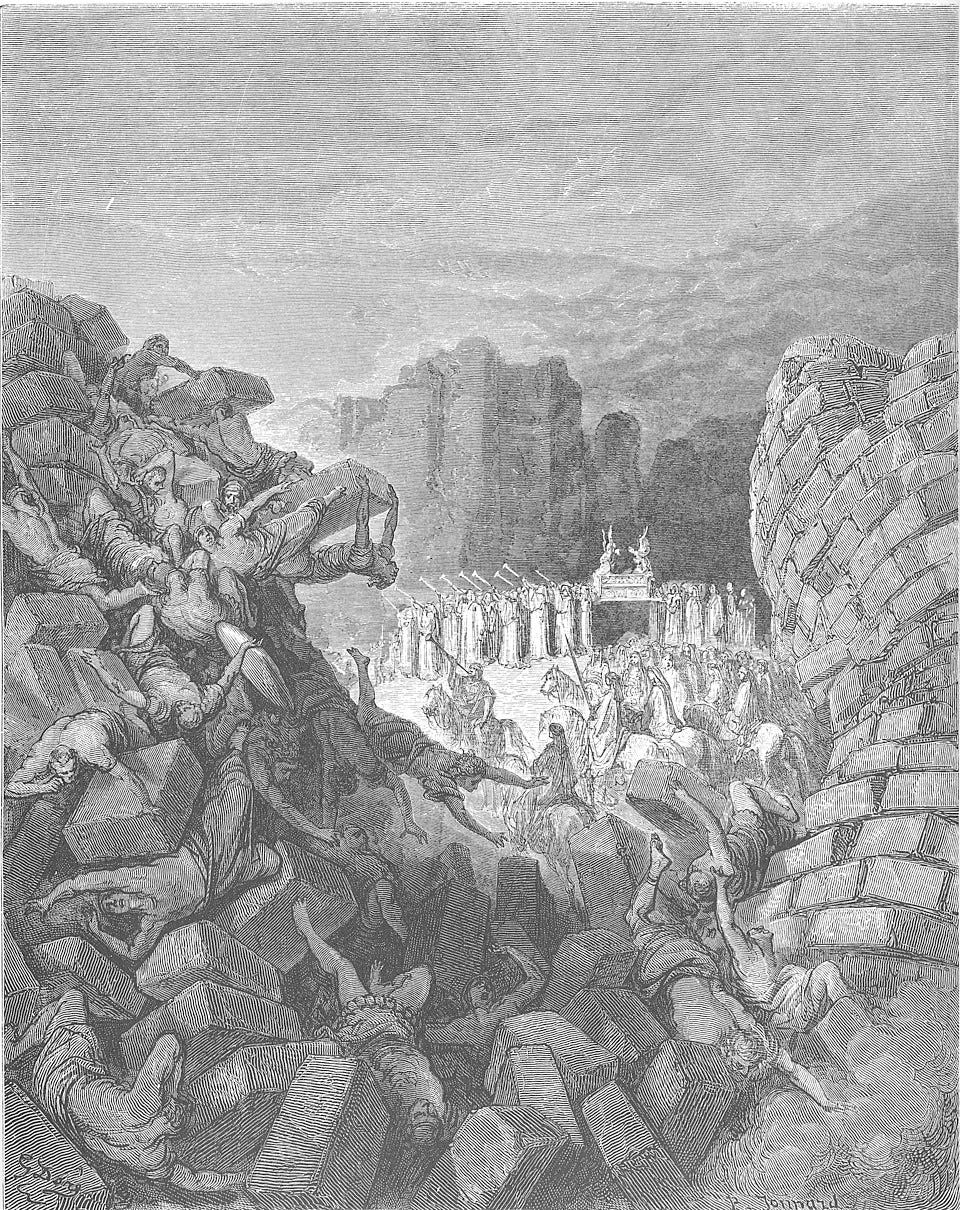
The pattern continues in First Samuel chapter fifteen, when the prophet Samuel delivers a divine command to King Saul regarding the Amalekite people. The wording is unambiguous. Saul is told to attack and “utterly destroy all that they have, and do not spare them, but kill both man and woman, child and infant, ox and sheep, camel and donkey.” When Saul carries out the slaughter but spares the Amalekite king and the best of the livestock, God rejects him as king for being insufficiently thorough. The moral lesson of the chapter, as written, is that ordering genocide is not the problem. Failing to complete the genocide is.
These are not isolated verses lifted out of context. They are the connective tissue of the conquest narrative.
Then there is the Pharaoh problem.
In the book of Exodus, the famous showdown between Moses and Pharaoh culminates in the death of every firstborn child in Egypt. The text is unusually candid about why the standoff lasts so long. Multiple times, Pharaoh is described as ready to release the Israelites, but God explicitly “hardens his heart” so that he refuses, allowing more plagues and ultimately the death of the firstborn. The text states this directly in Exodus chapter four, chapter seven, chapter nine, chapter ten, and chapter eleven. The God of the narrative actively prevents Pharaoh from making the morally correct choice, in order to extend the suffering and justify the killing of children who had no say in any of it.
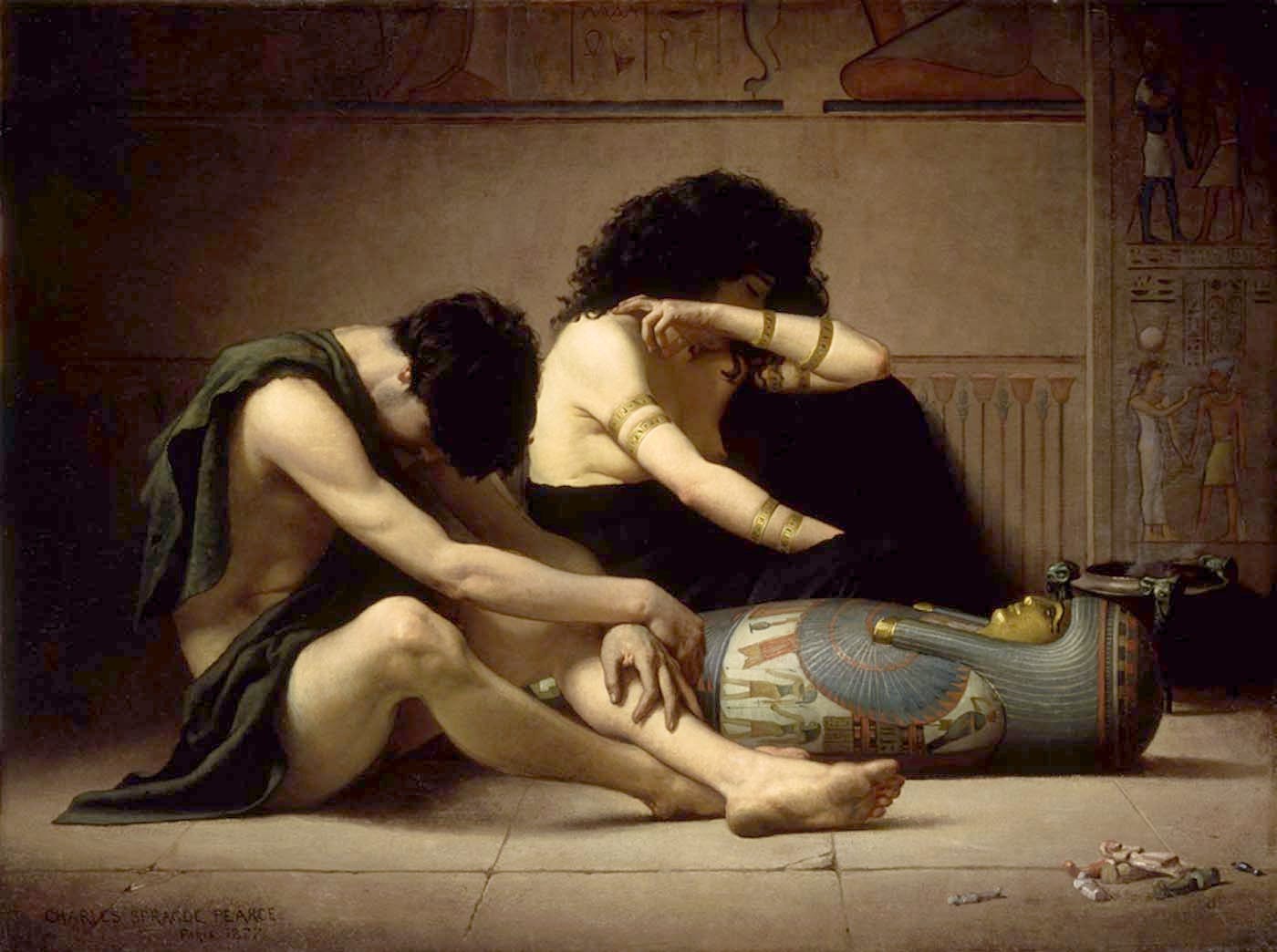
How can a text that orders the slaughter of infants and manipulates a foreign ruler into refusing to free his slaves serve as the foundation of objective morality?
The answer most apologists give is that these were exceptional, time-limited commands that no longer apply. But the deeper problem is that the text presents them as the will of an unchanging God. If killing Amalekite children was good in 1100 BCE because God commanded it, then the standard of good is not a stable ethical principle. The standard is whatever God commands. That is not objective morality. That is divine command theory, in which an action becomes good simply because the commander is powerful enough to call it so.
The lesser-known atrocities are even harder to explain.
In Second Kings chapter two, the prophet Elisha is mocked by a group of boys who call him “baldhead.” Elisha curses them in the name of the Lord, and two she-bears immediately come out of the woods and maul forty-two of the children. The text does not present this as a tragedy. It presents it as a demonstration of prophetic authority. The killing of more than forty children is recorded as evidence that Elisha is the genuine successor of Elijah.
In Numbers chapter thirty-one, after a successful military campaign against the Midianites, Moses is angry with the Israelite officers because they spared the women and children. He instructs them to kill every male child and every non-virgin woman, and to keep the virgin girls alive for the soldiers. The verse is on the page, in any English translation, in any pew Bible.
And then there is slavery.
The Old Testament does not abolish slavery. It regulates it. Exodus, Leviticus, and Deuteronomy contain detailed instructions for purchasing slaves from neighboring nations, treating Hebrew slaves differently from foreign slaves, transferring slaves through inheritance, beating slaves without facing penalty as long as they survive a few days, and keeping the children of slaves as slaves for life. The New Testament does not abolish slavery either. It instructs slaves to obey their masters and never offers a single command to release them. American slaveholders quoted these passages, accurately, for two centuries. They were not misreading the text. They were reading it.
The supposedly perfect moral foundation of Western religion did not begin with timeless ethics. It began with the divinely sanctioned conquest of a specific patch of land. It evolved through commands to slaughter entire peoples down to the livestock. It was decorated with stories of bears mauling children and a divine Pharaoh-puppeting to justify the killing of Egyptian firstborns. And it was ultimately preserved as scripture, read aloud in churches every Sunday, while later generations of believers were told to look elsewhere when they reached the troubling chapters.
Recognizing the actual content of these commands does not have to destroy whatever wisdom or beauty a believer finds in other parts of the text. But it does require us to be honest about the violent, regional, and morally unstable origins of the document that is still presented as the absolute standard of right and wrong.
Sources & Further Reading
Is God a Moral Monster? Making Sense of the Old Testament God by Paul Copan (A theologically conservative attempt to defend the Old Testament passages, useful precisely because it confirms the texts in question rather than denying them).
The Human Faces of God: What Scripture Reveals When It Gets God Wrong (and Why Inerrancy Tries to Hide It) by Thom Stark (A rigorous and accessible overview of the morally troubling commands in the Old Testament from a former evangelical scholar).
The God Delusion by Richard Dawkins, Chapter 7 (A widely circulated lay-level summary of the divine command theory problem, drawing directly on the conquest passages).
You will never see a collection plate passed around here for ten percent of your hard-earned money. This historical information should be accessible to everyone. But if you are able to chip in, a monthly subscription of exactly $6.66 is a great way to support.