
The Genesis Heist
How Bronze-Age Plagiarism Built the "Holy" Book
Reasoned Reality is incredibly important to me. You will never see a collection plate passed around here for ten percent of your hard-earned money. This historical information should be accessible to everyone. But if you are able to chip in, a monthly subscription of exactly $6.66 is a great way to support. If you are an exvangelical, like myself, you’ll understand my subscription price😊
I am so grateful to have you here, no matter what.
We are taught that the foundational stories of Genesis were uniquely revealed to the Hebrew people by a one-of-a-kind God. But when you examine the older texts of ancient Mesopotamia, you find the same flood, the same paradise, and nearly the same law code written centuries earlier.
Genesis is the bedrock of the Western religious imagination. The creation of the cosmos in six days. The garden with the forbidden fruit. The serpent. The first murder. The global flood and the rescued family on a wooden ark. The tower stretching toward heaven. We are taught that these stories were given to the Hebrew people by direct, exclusive revelation, setting them apart from every pagan culture around them.
It is a clean, elegant, and reassuring narrative. But there is a massive archaeological problem with this tidy storyline.
When you place the Hebrew Bible next to the much older clay tablets of Sumer, Akkad, and Babylon, the line between divine revelation and cultural inheritance disappears. The flood story, the creation account, the law code, and the paradise garden were not original to ancient Israel. They were already old, already widespread, and already canonized in Mesopotamian literature centuries before the first Hebrew scribe ever set ink to parchment. Genesis is not the start of the conversation. Genesis is the late entry.
To understand how this works, we have to start with where the ancient Israelites actually came from.
The Hebrew people did not appear in a vacuum. They emerged inside a Mesopotamian and Canaanite cultural matrix that had been writing, recording, and copying religious literature for nearly two thousand years before them. The patriarch Abraham is even introduced in Genesis as a man from Ur, a Sumerian city in modern Iraq. The earliest Hebrew scribes were swimming in a sea of stories that everyone in the region already knew. When they began writing their own scriptures, they did what every culture in human history has done. They borrowed.
The clearest example is the flood.
Around 1800 BCE, Babylonian scribes were already copying the Epic of Atrahasis and the Epic of Gilgamesh, both of which contain a fully developed flood narrative. In the Mesopotamian version, the gods grow annoyed with humanity and send a global deluge to wipe everyone out. A righteous man is warned in advance. He is instructed to build a massive boat to specific dimensions. He brings his family and pairs of animals on board. The flood lasts for a set number of days. The boat lands on a mountain. The hero releases birds, including a dove and a raven, to test whether the waters have receded. After the flood, he offers a sacrifice, and the deity smells the pleasing aroma.
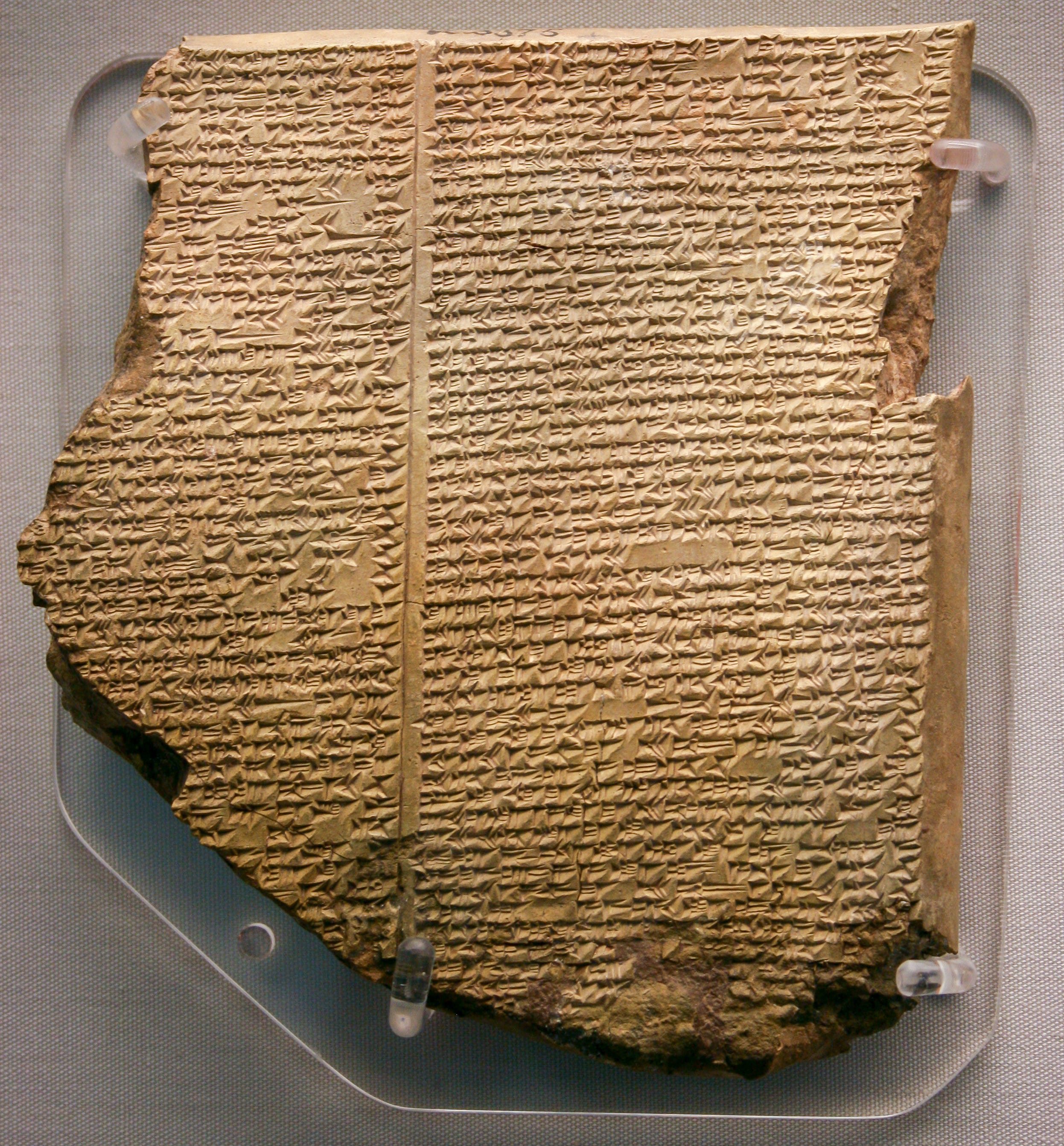
Every single one of those plot beats appears in Genesis 6 through 9, written between five hundred and a thousand years later. The names change. Utnapishtim becomes Noah. The mountain Nisir becomes Ararat. The pantheon becomes a single God. But the architecture of the story is identical because it was the same story.
The creation account follows the same pattern. The Babylonian Enuma Elish, written down by at least the twelfth century BCE and rooted in much older oral material, describes a primordial cosmos of watery chaos that is divided by a sky-god into an upper sea and a lower sea, with dry land emerging in between, followed by the creation of luminaries, animals, and finally human beings made to serve the gods. Read the first chapter of Genesis with the Enuma Elish open beside it, and the dependency is unmistakable. The Hebrew writers stripped out the divine combat and the multiple deities, but they kept the structural skeleton intact.
The lawcode is even harder to explain away. The Code of Hammurabi was carved into a black diorite stele around 1754 BCE, more than five centuries before any plausible date for Moses. The Code contains nearly three hundred specific legal rulings, including the famous principle of “an eye for an eye, a tooth for a tooth,” restitution for property damage, regulations on slavery, and laws about goring oxen. The Mosaic legal material in Exodus, Leviticus, and Deuteronomy reproduces the same rulings, often in nearly the same phrasing and the same case-law structure. The “ox that gores” appears in Hammurabi and reappears in Exodus 21 with almost identical wording.
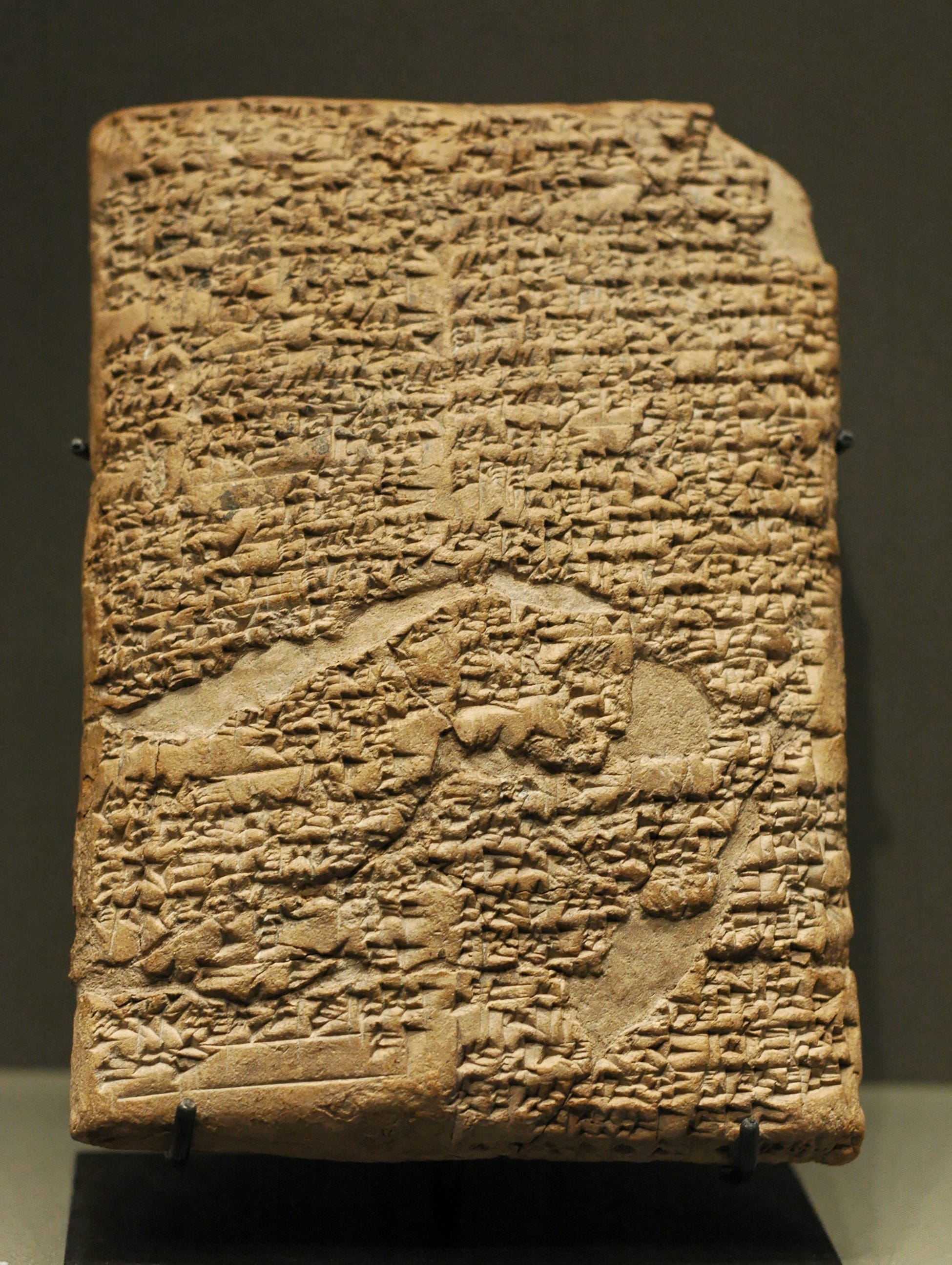
The Eden story has Mesopotamian fingerprints as well. Sumerian texts describe a paradise garden called Dilmun, a place without sickness or death, watered by sweet rivers. The Hebrew word for Eden is etymologically tied to the Sumerian “edin,” meaning a fertile plain. The four rivers of Eden in Genesis 2 include the Tigris and the Euphrates, locating paradise squarely inside southern Mesopotamia, which is the heartland of Sumerian mythology. Even the Tower of Babel reflects the actual ziggurat of Etemenanki in the city of Babylon, a real seven-story brick structure that ancient travelers described as “reaching to the heavens.”

How could so much of Israel’s “unique” sacred history map so cleanly onto stories from older neighboring civilizations?
The answer is the Babylonian exile.
In 586 BCE, the Babylonian empire conquered Jerusalem, destroyed the temple, and dragged the Israelite elite into captivity in the heart of Mesopotamia. For nearly half a century, Hebrew priests and scribes lived inside the very civilization whose myths their tradition would later mirror. They had constant access to Babylonian temple libraries, scribal schools, and oral storytelling. It is during and immediately after this exile that the bulk of the Hebrew Bible was edited, compiled, and finalized into the form we recognize today.
The Hebrew writers were not committing fraud. They were doing what every ancient religious tradition did. They took the great stories of their cultural world and reworked them to serve their own emerging theology. They cut out the polytheism. They replaced the squabbling gods with a single deity. They moralized the narratives. They made the flood a punishment for human evil instead of a noise complaint from heaven. They turned a Babylonian paradise into a parable about disobedience. They transformed Hammurabi’s casebook into a covenant from Sinai.
Recognizing this lineage does not mean Genesis has no value. Mythology is one of the most important things human beings have ever produced. But it does mean that the claim of unique, exclusive, divine authorship cannot survive contact with a clay tablet. The stories were already in the air. The Hebrew scribes inhaled and exhaled them like everyone else.
The “Word of God” did not begin with the Hebrew people. It began centuries earlier, in Sumerian temple schools, on cuneiform tablets, in the mouths of Babylonian poets. It began with a flood narrative that everyone in the ancient Near East already knew by heart. It began with a paradise garden whose Sumerian name is buried inside the Hebrew word “Eden.” And it ended up in a book that we are still told fell, fully formed, from the sky.
Recognizing this layered, deeply human history does not have to destroy the value of the text. But it does require us to be honest about the borrowed, recycled, and intensely cross-cultural origins of the stories that still shape our modern world.
Sources & Further Reading
The Bible Unearthed: Archaeology’s New Vision of Ancient Israel and the Origin of Its Sacred Texts by Israel Finkelstein and Neil Asher Silberman (A landmark survey of how archaeology and textual criticism reframe the historical claims of the Hebrew Bible).
Myths from Mesopotamia: Creation, the Flood, Gilgamesh, and Others translated by Stephanie Dalley (The standard scholarly translation of the older Mesopotamian texts that Genesis demonstrably draws from).
Did God Have a Wife? Archaeology and Folk Religion in Ancient Israel by William G. Dever (A leading biblical archaeologist’s evidence-based reconstruction of how Israelite religion actually emerged from its surrounding cultures).
You will never see a collection plate passed around here for ten percent of your hard-earned money. This historical information should be accessible to everyone. But if you are able to chip in, a monthly subscription of exactly $6.66 is a great way to support.